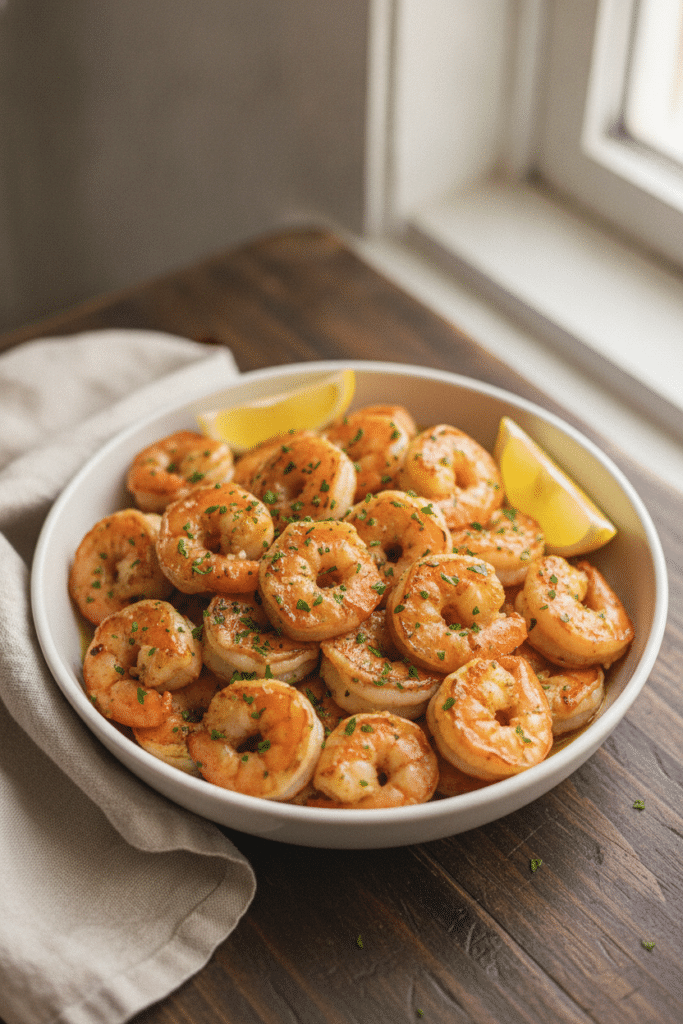
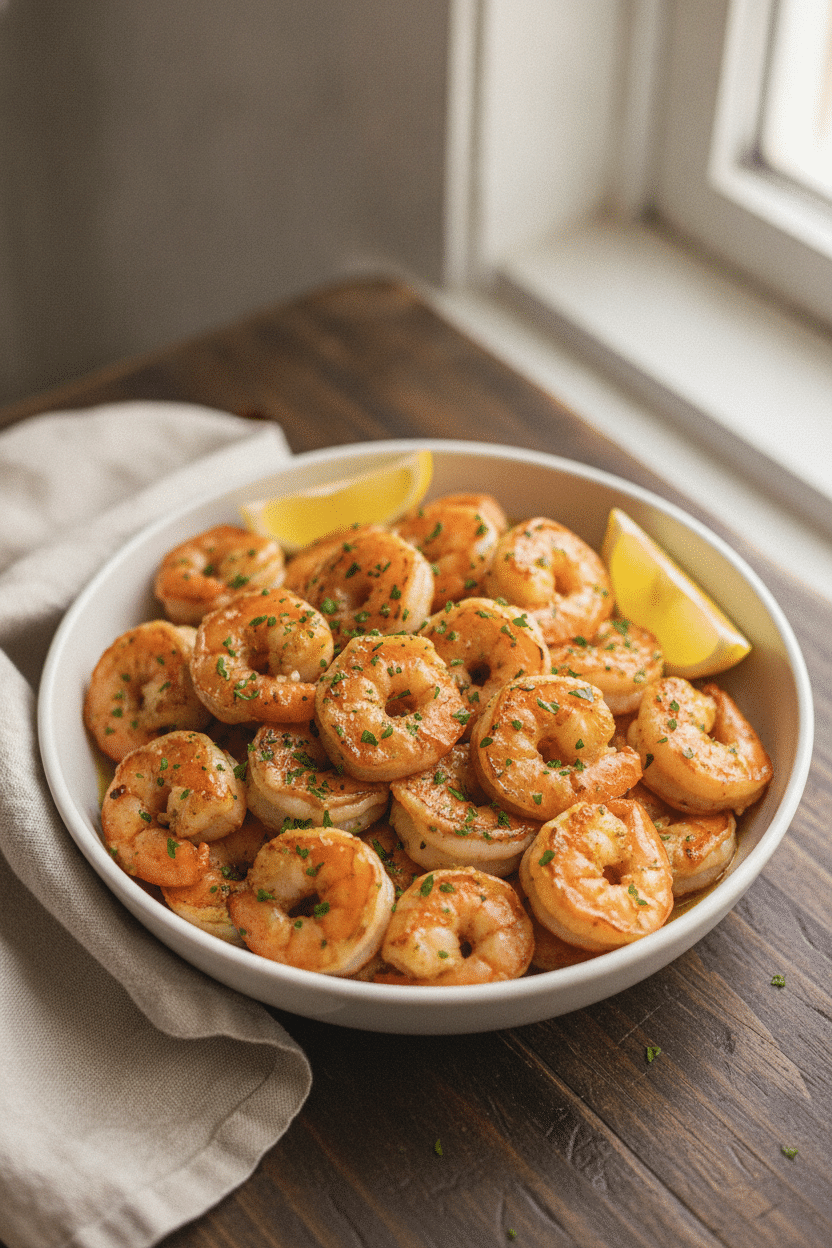
15-Minute Skillet Shrimp with Garlic and Lemon brings lightly charred edges, tender centers, and a buttery pan sauce to the table quickly. The shrimp cooks in one hot skillet, so you can have dinner ready before the rice finishes warming.
Why Make This Recipe
This is one of those easy shrimp recipes that earns a regular place in the weeknight rotation. The ingredient list is short, the cooking time is quick, and the finished shrimp can go in several directions. Spoon it over rice, tuck it into warm tortillas, toss it with pasta, or serve it beside a crisp salad.
The key is a hot pan and a single layer of shrimp. Crowding makes the shrimp release liquid, and that leaves you with pale, steamed shrimp instead of browned edges. I cook them in two batches when needed, then bring everything together with garlic, butter, lemon juice, and parsley.
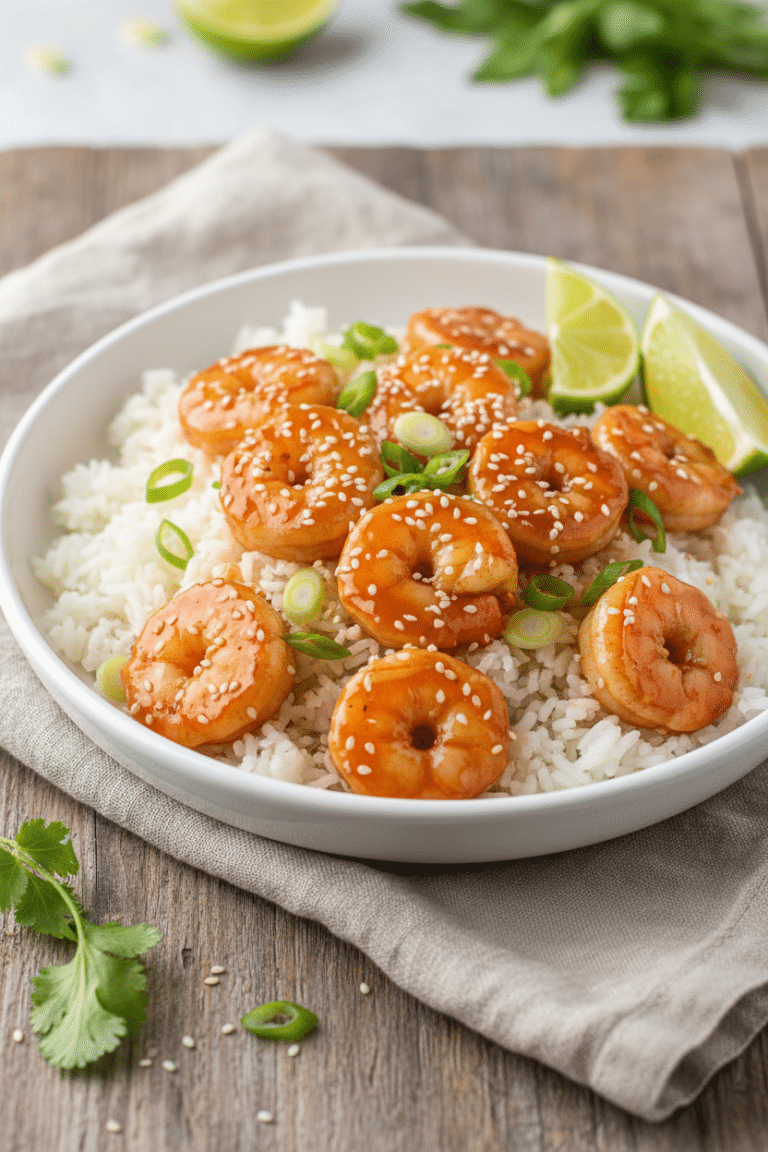
For more quick skillet dinners, try these Honey Garlic Shrimp Skillet or Creamy Garlic Shrimp. Both use the same helpful rule: shrimp needs a short stay in the pan.
How to Make 15-Minute Skillet Shrimp with Garlic and Lemon
Ingredients:
- 1 1/4 pounds large shrimp, peeled and deveined, tails on or off
- 1 teaspoon kosher salt
- 1/2 teaspoon black pepper
- 1/2 teaspoon smoked paprika
- 1 tablespoon olive oil
- 3 tablespoons unsalted butter, divided
- 4 garlic cloves, finely minced
- 1 tablespoon fresh lemon juice
- 1 teaspoon finely grated lemon zest
- 2 tablespoons chopped fresh parsley
- 1/4 teaspoon red pepper flakes, optional
- 2 tablespoons water or low-sodium chicken broth
Directions:
Prep time is 8 minutes, cook time is 7 minutes, and this recipe serves 4. Have the shrimp patted dry before you heat the pan. Dry shrimp sear; wet shrimp steam.
- Place the shrimp in a bowl and sprinkle with the salt, black pepper, and smoked paprika. Toss until each piece is lightly coated.
- Set a large 12-inch skillet over medium-high heat. Add the olive oil and 1 tablespoon of the butter. When the butter foams and the oil looks loose and shiny, the pan is ready.
- Add half of the shrimp in a single layer. Leave them alone for 60 to 90 seconds, until the underside is pink with a few browned spots. Flip and cook for 45 to 60 seconds more. The shrimp should curl into a loose C shape, not a tight O.
- Transfer the cooked shrimp to a plate. Add the remaining shrimp and cook the same way. If the pan looks dry, add another small splash of olive oil.
- Lower the heat to medium. Add the remaining 2 tablespoons butter, then stir in the garlic and red pepper flakes if using. Cook for 30 seconds, just until the garlic smells fragrant. Don’t let it turn dark brown.
- Pour in the water or broth, lemon juice, and lemon zest. Scrape the browned bits from the bottom of the pan with a wooden spoon. Simmer for 45 seconds, until the sauce looks lightly glossy.
- Return the shrimp and any juices to the skillet. Toss for 30 seconds to coat, then remove the pan from the heat. Sprinkle with parsley and taste for salt and lemon before serving.
How to Serve 15-Minute Skillet Shrimp with Garlic and Lemon
Serve the shrimp straight from the skillet while the sauce is loose and buttery. Warm rice is the easiest choice, but angel hair pasta, couscous, and mashed potatoes all catch the lemon sauce nicely. For a lighter plate, spoon the shrimp over arugula or roasted zucchini.
Crusty bread belongs here if you have it. Tear off a piece and drag it through the garlic butter left in the pan. A simple cucumber salad or steamed green beans keeps the meal fresh without adding much work.
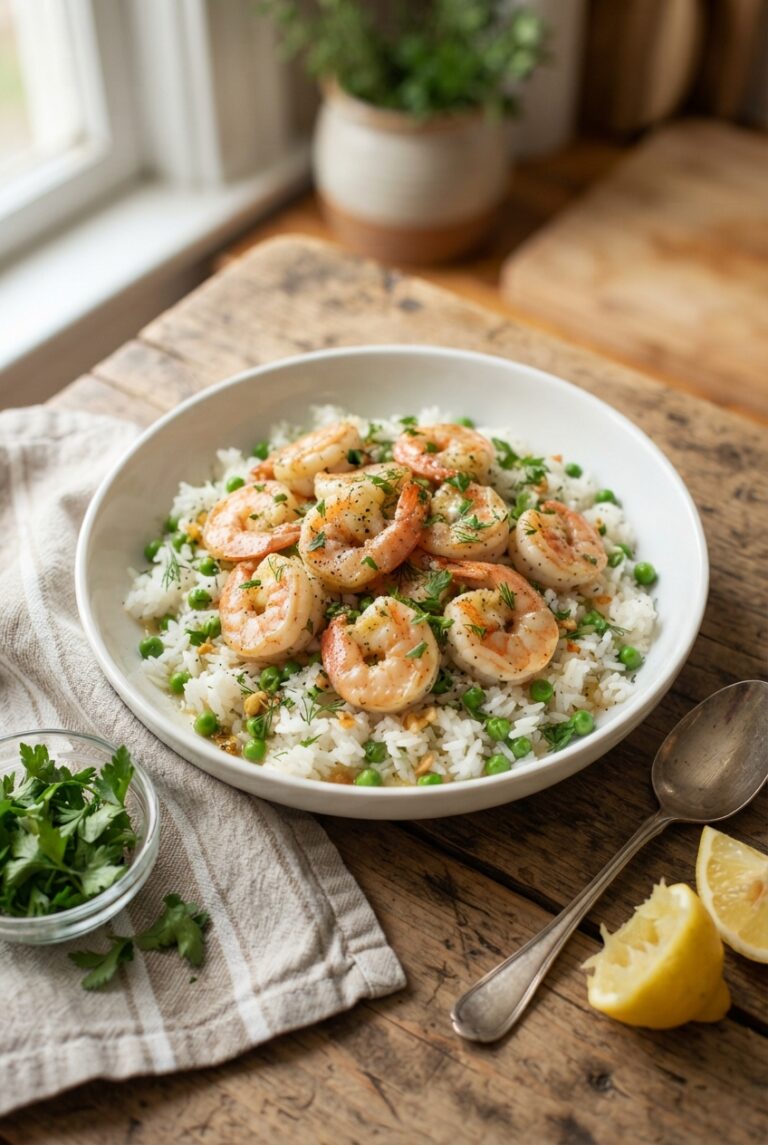
For another dinner with shrimp and a bright sauce, take a look at this Lemon Garlic Shrimp Rice Skillet. It is a good option when you want the rice to cook in the same pan.
How to Store 15-Minute Skillet Shrimp with Garlic and Lemon
Let the shrimp cool slightly, then place it in a shallow airtight container and refrigerate within two hours. The FDA’s seafood guidance is useful when you’re checking storage and cooking advice. Refrigerated shrimp is best used within 3 days.
Reheat it gently in a skillet over low heat with a tablespoon of water or broth. Stop as soon as the shrimp is warm. High heat makes already-cooked shrimp rubbery. I don’t recommend freezing the finished shrimp because the butter sauce can separate and the texture will be softer after thawing.
Tips to Make 15-Minute Skillet Shrimp with Garlic and Lemon
- Use large shrimp, around 16 to 20 per pound. Smaller shrimp cook so quickly that they can turn firm before the edges brown.
- Pat the shrimp very dry with paper towels. This small step makes the biggest difference in a skillet recipe.
- Don’t marinate the shrimp in lemon juice before cooking. The acid starts changing the texture and can make the surface tough.
- Keep the shrimp in one layer. A 12-inch skillet usually handles about 3/4 pound comfortably.
- Look for a loose C shape and an opaque center. A tightly curled O shape usually means the shrimp has cooked too long.
- Add the garlic after the shrimp comes out. Garlic burns quickly in a hot, nearly dry pan, especially when finely minced.
- Use fresh lemon juice. Bottled juice works in a pinch, but fresh zest and juice make the sauce taste cleaner.
- For food-safety guidance on seafood handling and doneness, check the USDA seafood safety recommendations. Shrimp should be opaque and pearly, with a firm but tender texture.
- If your shrimp are frozen, thaw them overnight in the refrigerator or place them in a sealed bag in cold water. Dry them thoroughly before seasoning.
Variation
For chili-lime skillet shrimp, replace the lemon juice and zest with 1 1/2 tablespoons lime juice and 1/2 teaspoon lime zest. Add 1/2 teaspoon chili powder with the smoked paprika, then finish with chopped cilantro instead of parsley. This version is especially good in tortillas with shredded cabbage and avocado.
You can also turn the recipe into a quick pasta dinner. Cook 8 ounces of linguine separately, reserve 1/2 cup of the pasta water, and toss the noodles with the finished shrimp and sauce. Add pasta water a tablespoon at a time until everything looks glossy. The shrimp should be added at the very end.
15-Minute Skillet Shrimp with Garlic and Lemon
Ingredients
Method
- Place the shrimp in a bowl and sprinkle with the salt, black pepper, and smoked paprika. Toss until each piece is lightly coated.
- Set a large 12-inch skillet over medium-high heat. Add the olive oil and 1 tablespoon of the butter. When the butter foams and the oil looks loose and shiny, the pan is ready.
- Add half of the shrimp in a single layer. Leave them alone for 60 to 90 seconds, until the underside is pink with a few browned spots. Flip and cook for 45 to 60 seconds more. The shrimp should curl into a loose C shape, not a tight O.
- Transfer the cooked shrimp to a plate. Add the remaining shrimp and cook the same way. If the pan looks dry, add another small splash of olive oil.
- Lower the heat to medium. Add the remaining 2 tablespoons butter, then stir in the garlic and red pepper flakes if using. Cook for 30 seconds, just until the garlic smells fragrant. Don't let it turn dark brown.
- Pour in the water or broth, lemon juice, and lemon zest. Scrape the browned bits from the bottom of the pan with a wooden spoon. Simmer for 45 seconds, until the sauce looks lightly glossy.
- Return the shrimp and any juices to the skillet. Toss for 30 seconds to coat, then remove the pan from the heat. Sprinkle with parsley and taste for salt and lemon before serving.
Notes
FAQs
Can I use frozen shrimp for this recipe?
Yes. Thaw the shrimp fully, remove excess moisture, and pat them dry before seasoning. Frozen shrimp that goes straight into the skillet will cool the pan and release too much water.
How do I know when skillet shrimp is done?
The shrimp should be opaque from edge to center, pink on the outside, and curled into a loose C. For a more precise check, seafood is generally considered safely cooked at 145°F, as explained by the FDA’s safe temperature chart.
Why did my shrimp turn rubbery?
They likely stayed in the pan too long or cooked in a crowded skillet. Large shrimp usually need about 2 minutes total, depending on their size and the heat of the pan. Remove them as soon as the center turns opaque, since carryover heat keeps cooking them.
Conclusion
Keep this skillet shrimp recipe nearby for nights when you need dinner to move quickly. A hot pan, dry shrimp, and a short garlic-lemon finish are all it takes to make a meal that feels fresh without a long cleanup.