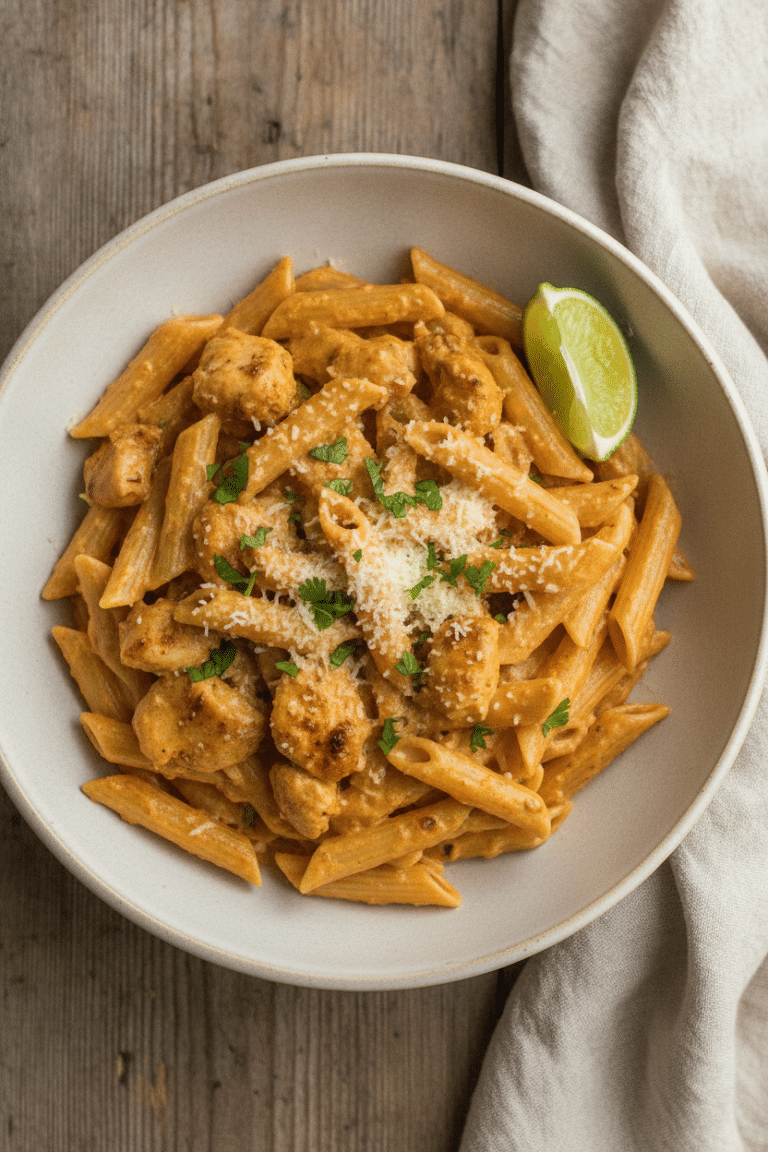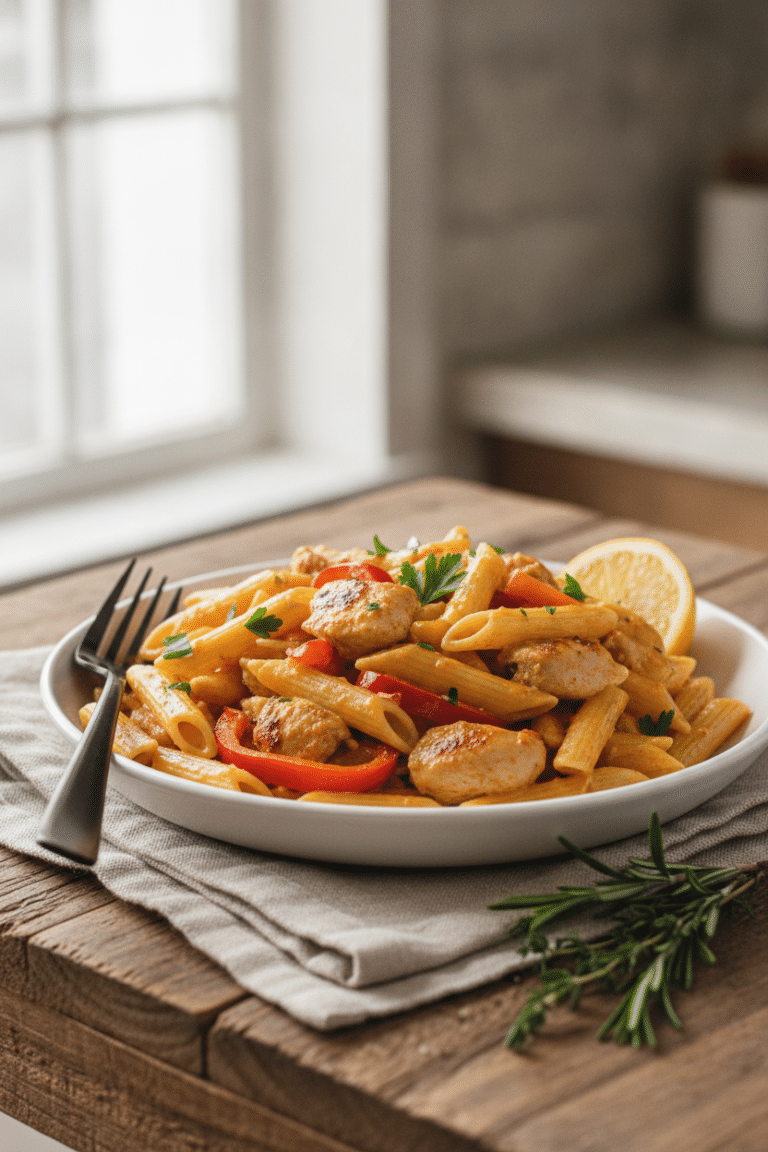

Garlic Parmesan Chicken Pasta is the cozy, restaurant-style dinner that disappears the second it hits the table. Tender bites of seasoned chicken get tossed with pasta in a rich, garlicky parmesan cream sauce — and here’s the best part: the pasta cooks right in the sauce, in the same pan. One skillet, about 35 minutes, and a dinner the whole family asks for again.
We keep this in heavy rotation in the Recipe Luxury kitchen because it hits every note: creamy without being heavy, deeply savory from real parmesan and plenty of garlic, and hearty enough to feed a hungry family with leftovers — if you’re lucky. Below you’ll find everything to nail it on the first try: the ingredients that matter, exact timings, variations, and fixes for every common slip.
What makes this chicken pasta so good?
The one-pan method isn’t just about fewer dishes — it genuinely makes the food better. When pasta simmers directly in broth and cream, it releases its starch into the sauce instead of down the drain. That starch is a natural thickener, so the sauce turns glossy and clings to every piece without any flour or tricks. Meanwhile, the pasta itself soaks up garlic and parmesan flavor as it cooks, instead of tasting like plain noodles wearing a sauce.
The most common mistake? Boiling the sauce hard. A rolling boil breaks cream and leaves the pasta cooking unevenly — crunchy in spots, mushy in others. This dish wants a steady, gentle simmer with an occasional stir. Keep it there and the pan practically runs itself.
Second mistake: pre-shredded parmesan. The anti-caking coating on bagged cheese refuses to melt smoothly, turning a silky sauce grainy. Grate it fresh from a block — it takes ninety seconds and changes everything.
Key ingredients and why they matter
Full amounts are in the recipe card below — these are the ones worth getting right:
| Key Ingredient | What To Use | Why It Matters |
|---|---|---|
| Chicken | Breasts or thighs, cut into even bites | Even, bite-sized pieces sear fast and stay juicy instead of drying out. |
| Garlic | 6 fresh cloves, minced | The backbone of the dish. Cook it just until fragrant — browned garlic turns bitter. |
| Parmesan | Grated fresh from a block | Melts silky. Pre-shredded cheese has anti-caking agents that make the sauce grainy. |
| Chicken broth | 2 cups, low-sodium | Cooks the pasta and seasons it from the inside; low-sodium keeps the reduced sauce balanced. |
| Heavy cream | Full-fat | Stable at a simmer and makes the sauce luxurious. Milk can split during the pasta cook. |
| Pasta | Short shapes: penne or rotini | They cook evenly submerged in the sauce and catch it in every ridge. |
How to make Garlic Parmesan Chicken Pasta
Everything happens in one skillet, in four stages:
- Sear the chicken. Seasoned, bite-sized pieces get golden in a hot pan, then rest on a plate.
- Bloom the garlic. Butter and six cloves of garlic, just until your kitchen smells incredible — about a minute.
- Simmer the pasta in the sauce. Broth, cream, and uncooked pasta go in together; 12–15 gentle minutes with the lid on.
- Finish and reunite. Parmesan melts in, the chicken comes back, and everything gets glossy together.
Garlic Parmesan Chicken Pasta
Tender seasoned chicken and pasta in a creamy garlic parmesan sauce — a one-pan comfort dinner ready in 35 minutes.
Ingredients
- 1.5 lbs boneless chicken breasts, cut into bite-sized pieces
- 1 teaspoon salt
- 1/2 teaspoon black pepper
- 1 teaspoon garlic powder
- 1/2 teaspoon paprika
- 2 tablespoons olive oil
- 3 tablespoons butter
- 6 cloves garlic, minced
- 2 cups chicken broth
- 1 cup heavy cream
- 1 cup grated parmesan cheese
- 1 teaspoon Italian seasoning
- 12 oz short pasta (penne or rotini)
- Fresh parsley, chopped, for garnish
Instructions
- Toss the chicken pieces with the salt, pepper, garlic powder, and paprika until evenly coated.
- Heat the olive oil in a large skillet over medium-high heat. Add the chicken and sear for 5–6 minutes, turning, until golden and cooked through. Transfer to a plate.
- Reduce the heat to medium and melt the butter in the same skillet. Add the minced garlic and cook for about 1 minute, until fragrant (don’t let it brown).
- Pour in the chicken broth and heavy cream, scraping up any browned bits. Bring to a gentle simmer.
- Add the uncooked pasta directly to the skillet, making sure it’s mostly submerged. Cover and simmer for 12–15 minutes, stirring occasionally, until the pasta is tender and the liquid has reduced into a sauce.
- Stir in the parmesan and Italian seasoning until melted and creamy. Return the chicken to the pan and toss to coat.
- Garnish with fresh parsley and extra parmesan, and serve hot.
Pasta shapes and simmer times
Different shapes drink up liquid at different speeds. Here’s the cheat sheet for the one-pan method:
| Pasta Shape | Simmer Time (covered) | Notes |
|---|---|---|
| Penne | 13–15 minutes | The classic here — sturdy tubes that hold the sauce. |
| Rotini / fusilli | 12–14 minutes | Cooks slightly faster; the spirals grab the most sauce. |
| Rigatoni | 14–16 minutes | Bigger tubes need an extra splash of broth near the end. |
| Shells (medium) | 12–14 minutes | Little cups of sauce — kids’ favorite. Stir gently so they don’t nest. |
| Gluten-free pasta | Check at 10 minutes | GF pasta releases more starch and softens faster — watch it closely. |
Easy ways to customize it
- Cajun twist. Swap the Italian seasoning for Cajun seasoning and a pinch of cayenne — instant Cajun chicken pasta.
- Add vegetables. Stir baby spinach in at the end, or add steamed broccoli with the parmesan.
- Bacon upgrade. Crisp a few chopped strips first and use the fat for searing the chicken. No regrets.
- Use thighs. Boneless thighs stay extra juicy and are more forgiving on the sear.
- Lemon-garlic version. Finish with lemon zest and a squeeze of juice to cut the richness.
- Mushroom lovers. Sauté sliced mushrooms with the garlic for a deeper, earthier sauce.
Common problems and how to fix them
| Problem | Likely Cause | Easy Fix |
|---|---|---|
| Pasta still firm but liquid is gone | Simmer too hot — liquid evaporated too fast | Add warm broth 1/4 cup at a time, drop the heat, and keep the lid on. |
| Sauce is grainy | Pre-shredded parmesan, or cheese added over high heat | Use block parmesan and stir it in off a hard boil, at a gentle simmer. |
| Sauce too thick after resting | Pasta keeps absorbing as it sits (normal) | Loosen with a splash of warm broth or cream just before serving. |
| Chicken turned dry | Overcooked during the sear, or pieces too small | Cut 1-inch pieces, sear just until golden and cooked, and let them rest off-heat while the pasta simmers. |
| Pasta clumped together | Not stirred during the simmer | Give it a good stir every 3–4 minutes to keep pieces separated and cooking evenly. |
Tips for the best results
- Keep the simmer gentle. A hard boil breaks the cream and cooks the pasta unevenly — low and slow keeps it silky.
- Stir, but don’t hover. Every few minutes is enough to keep the pasta from sticking without cooling the pan.
- Taste before the final salt. Between the broth and a full cup of parmesan, it may need less than you think.
- Rest it two minutes. The sauce thickens to its perfect clingy texture right after it comes off the heat.
The right pan makes a difference
Because the pasta cooks in the sauce, the skillet you choose quietly decides how the dish turns out. You want something wide, deep, and heavy-bottomed — ideally 12 inches with straight-ish sides and a lid. Width matters because the pasta needs to sit in a mostly single layer to cook evenly; crowd it into a small pan and the pieces on top steam while the ones underneath overcook.
A heavy base (stainless steel, enameled cast iron, or a good non-stick) spreads heat evenly and prevents the cream from scorching in hot spots. Thin, lightweight pans are the usual culprit behind a scorched, slightly bitter sauce. And if your skillet has no lid, a baking sheet laid across the top works perfectly — you just need to trap the steam so the pasta cooks through.
What to serve with it
It’s rich and filling on its own, but a crisp green salad balances it beautifully, and a slice of garlic bread is never a bad idea for soaking up that sauce. For more weeknight pasta wins, try our viral Baked Feta Pasta or saucy Marry Me Chicken — and when you want the hands-off version of creamy chicken comfort, our Crockpot Marry Me Chicken has you covered.
Storage and leftovers
Keep leftovers in an airtight container in the fridge for up to 3 days. Reheat gently on the stovetop or at half power in the microwave with a splash of broth or cream — the pasta drinks up sauce as it sits, so a little extra liquid brings it right back to life. Like most cream sauces, it doesn’t freeze well; the texture suffers once thawed. It also makes a fantastic next-day lunch: portion it into containers with a teaspoon of the sauce’s pan drippings and you’ll be the envy of the break room.
Frequently Asked Questions
Does the pasta really cook in the sauce?
Yes — that’s the magic of the one-pan method. The uncooked pasta simmers directly in the broth and cream, releasing its starch into the sauce (which thickens it naturally) while soaking up garlic-parmesan flavor as it cooks.
Can I use milk instead of heavy cream?
We don’t recommend it here — milk can split during the long pasta simmer. Half-and-half works if you keep the heat very gentle, but heavy cream gives the most stable, silky result.
Why is my sauce grainy?
Almost always the cheese: pre-shredded parmesan is coated with anti-caking agents that won’t melt smoothly. Grate it fresh from a block and stir it in at a gentle simmer, and the sauce stays glossy.
Can I make it ahead of time?
It’s best fresh, but leftovers reheat well for up to 3 days with a splash of broth or cream. If prepping ahead, slightly undercook the pasta so it doesn’t go soft when reheated.
What chicken works best — breasts or thighs?
Both are great. Breasts are the classic lean choice; cut them evenly and don’t over-sear. Thighs bring more flavor and stay juicier — ideal if you tend to walk away from the stove.
How do I make it lighter?
Use half-and-half over a very gentle simmer, trim the butter to 2 tablespoons, and bulk it up with spinach or broccoli. The parmesan still carries plenty of flavor in a lighter sauce.
Bring it to the table
One pan, 35 minutes, and a garlicky, parmesan-laced sauce the whole family will chase around the bowl — this is pure comfort with weeknight effort. Make it once and it earns a permanent spot in the rotation. Save it to Pinterest for your next busy week, and let us know how it turned out!