
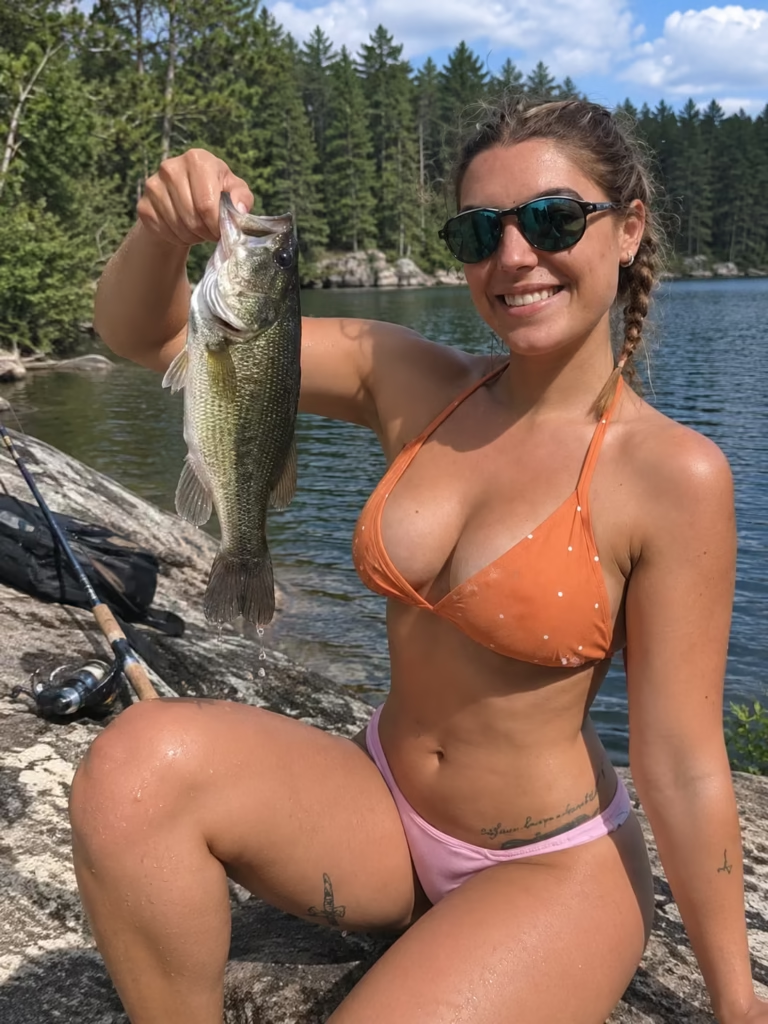
There’s something addictive about bass fishing.
You can spend an hour casting without much happening, then suddenly your line tightens, the rod bends, and everything changes.
Bass are aggressive fish, but that doesn’t mean they’re always easy to catch. Some days they’ll chase almost anything. Other days, you can cast directly beside them and get absolutely no reaction.
The good news is that catching bass becomes much easier once you understand where they like to hide, what they eat, and when they are most active.
Here are a few simple things that have helped me get more bites.
1. Start Fishing Around Cover
One of the biggest mistakes beginners make is casting randomly into open water.
Bass love structure.
Look for places like:
- Fallen trees
- Rocks
- Weed beds
- Boat docks
- Lily pads
- Submerged branches
- Shaded banks
These areas give bass somewhere to hide while they wait for smaller fish, insects, frogs, and other prey.
Instead of making ten random casts, spend more time casting close to areas where a bass could realistically be hiding.
2. Fish Early in the Morning
Some of my favorite bass-fishing moments happen just after sunrise.
The water is quieter, temperatures are cooler, and bass often move into shallower water looking for food.
Early morning is also a great time to try topwater lures.
Watching a bass suddenly explode through the surface and grab your lure is one of those fishing moments that never gets old.
Evening can be another productive period, especially during warmer months.
3. Try a Soft Plastic Worm
If I could give a beginner only one bass lure, a soft plastic worm would probably be near the top of the list.
They’re simple, inexpensive, and incredibly versatile.
You can slowly drag one near the bottom, work it around weeds, or cast it beside fallen trees and docks.
Natural-looking colors such as green pumpkin, watermelon, brown, and darker shades are often good starting points.
The biggest secret?
Slow down.
Sometimes people work their lure much faster than they realize.
4. Match Your Lure to the Water
Water conditions can make a big difference.
In clear water, I usually prefer more natural-looking colors.
In muddy or stained water, darker or brighter colors can help the fish notice the lure.
You can also use lures that create vibration or noise when visibility is poor.
Spinnerbaits and chatter-style lures can be useful because bass don’t rely only on sight to find prey.
5. Don’t Ignore Small Ponds
People often think they need a huge lake or expensive fishing boat to catch good bass.
You don’t.
Some surprisingly large bass live in ordinary farm ponds, small lakes, canals, and reservoirs.
Small bodies of water can actually be easier to understand because there are fewer places for the fish to hide.
Walk slowly along the bank and look for shade, weeds, branches, deeper holes, or anything that looks different from the surrounding water.
6. Change Something When You’re Not Getting Bites
If you’ve been throwing the exact same lure in the exact same area for an hour without a bite, it might be time to change your approach.
Try changing:
- Your lure
- Your retrieve speed
- Your fishing depth
- Your casting location
- Your lure color
Sometimes a very small adjustment is all it takes.
I’ve had days where bass completely ignored one lure, then started biting minutes later after I switched to something slightly different.
7. Watch the Weather
Cloudy days can be surprisingly good for bass fishing.
When the sun is bright, bass often stay closer to shade or deeper cover.
With cloud cover, they may move around more freely.
Wind can also push small baitfish toward certain parts of a lake, and bass may follow them.
Instead of automatically avoiding imperfect weather, learn how the conditions might change where the fish are feeding.
8. Keep Your Casts Quiet
Bass can be aggressive, but they can also be easily spooked in shallow water.
Try not to stomp around the shoreline or throw heavy objects into the water.
When approaching a promising fishing spot, move slowly.
And whenever possible, make your lure land softly rather than crashing into the water.
A little patience can make a surprisingly big difference.
9. Keep Fishing Simple
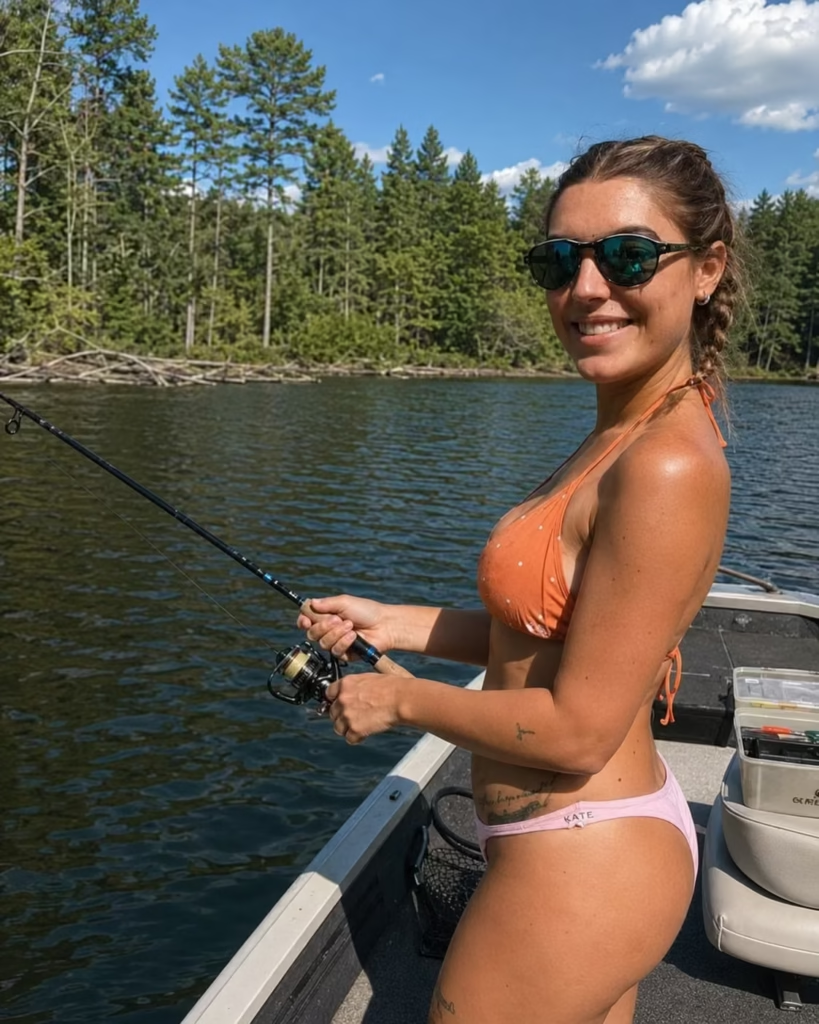
Fishing gear can become complicated very quickly.
Different rods.
Different reels.
Hundreds of lures.
Dozens of techniques.
But you really don’t need all of that when you’re learning.
A basic rod and reel, a few soft plastics, a spinnerbait, and maybe a topwater lure are enough to have a great day on the water.
Spend more time learning how fish behave and less time worrying about owning every new piece of tackle.
The Best Part Isn’t Always the Fish
Of course, catching a big bass makes the day better.
But fishing has never been only about what ends up on the hook.
Sometimes the best part is being beside the water early in the morning when everything is quiet.
No notifications.
No traffic.
No rush.
Just you, the water, and the possibility that the next cast could be the one.
And occasionally, it is.