

A ginger bug is a jar of grated ginger, sugar and water that you feed for about a week until it starts fizzing on its own. That’s it. And once it’s alive, it becomes the starter for homemade sodas — naturally carbonated, genuinely fizzy, and made from three ingredients that cost almost nothing.
It’s the same idea as a sourdough starter, but for drinks instead of bread, and it takes days rather than weeks. Two things decide whether yours comes alive or just sits there going cloudy, and both are about what you buy.
What is a ginger bug and how does it work?
Fresh ginger skin carries wild yeasts and lactic acid bacteria — they live on the outside of the root, picked up from the soil it grew in. Put that ginger in sugar water at room temperature and you give those microbes exactly what they want: food, moisture and warmth.
They wake up, multiply, and start eating the sugar. The by-products are carbon dioxide (the fizz) and a small amount of acid (the tang). Feed the jar daily and the population grows until it’s vigorous enough to carbonate a whole bottle of sweetened liquid on its own.
You aren’t adding a culture. You’re farming one that was already there.
Which explains the first and most common failure: using the wrong ginger. Conventional supermarket ginger is very often waxed, irradiated or treated to extend shelf life, and any of those will have killed off most of the wild yeast on the skin. Use organic, unwaxed ginger, and do not peel it — the peel is where the entire culture lives. Scrub it, don’t skin it.
The second failure is chlorinated tap water. Chlorine and chloramine are in your water precisely to kill microorganisms, and they will kill yours too. Use filtered or spring water, or leave tap water uncovered on the counter for 24 hours so the chlorine can off-gas.
Key ingredients and why they matter
| Key Ingredient | What To Use | Why It Matters |
|---|---|---|
| Fresh ginger | Organic, unwaxed, unpeeled | The wild yeast lives on the skin. Waxed or irradiated ginger simply won’t start. |
| Water | Filtered, spring, or tap left out 24 hours | Chlorine is designed to kill microbes. It doesn’t distinguish between bad ones and yours. |
| Sugar | Plain white granulated | Fastest, cleanest food for the yeast. Honey has antibacterial properties and can stall it; raw sugar works but ferments slower. |
| The jar | Glass, roughly 500 ml, wide mouth | Glass won’t react with the acid. Wide mouth makes daily stirring easy. |
| The cover | Cloth or coffee filter and a rubber band | It must breathe. A sealed lid traps CO₂ and the jar can crack or spray. |
| Warmth | 68–78°F (20–25°C) | Too cold and it stalls; too hot and it goes sour. A kitchen counter away from direct sun is ideal. |
How to make it
- Day 1: grated unpeeled ginger, sugar and water in a jar. Cover with cloth.
- Days 2–7: add a spoon of ginger and a spoon of sugar every day, and stir.
- Watch for fizz. When it bubbles actively and smells yeasty and sharp, it’s alive.
- Use it or refrigerate it and feed weekly to keep it going indefinitely.
Ginger Bug
A wild-fermented ginger starter for homemade sodas — three ingredients, about a week, and it lasts for years.
Ingredients
- 2 cups filtered or non-chlorinated water
- 2 tablespoons organic unpeeled ginger, finely grated (plus more for daily feeding)
- 2 tablespoons white granulated sugar (plus more for daily feeding)
- 1 clean 500 ml glass jar
- A square of cloth, muslin or a coffee filter, plus a rubber band
Instructions
- Scrub the ginger well under cold water but do not peel it. The wild yeast you need lives on the skin. Grate 2 tablespoons, skin and all.
- Put the grated ginger, 2 tablespoons sugar and the water into the jar. Stir until the sugar dissolves.
- Cover the jar with cloth or a coffee filter and secure with a rubber band. It needs to breathe — never seal it with a solid lid at this stage.
- Leave it somewhere warm, around 68–78°F, out of direct sunlight.
- Every day for the next 5–7 days, add 1 tablespoon grated ginger and 1 tablespoon sugar, then stir well. Stirring introduces oxygen, which the yeast needs early on.
- Watch for signs of life from around day 3: small bubbles at the surface, a faint hiss when stirred, and a smell that turns from plain ginger to yeasty and slightly sharp.
- It’s ready when stirring produces an obvious fizz and bubbles rise on their own, usually day 5–7. Cooler kitchens can take up to 10 days — keep feeding, it isn’t broken.
- To use it, strain off the liquid and add about 1/4 cup per 4 cups of sweetened tea, juice or ginger syrup, then bottle for a second ferment.
- To keep the bug alive, top the jar back up with fresh water, ginger and sugar. Store it in the fridge and feed once a week, or leave it on the counter and feed daily.
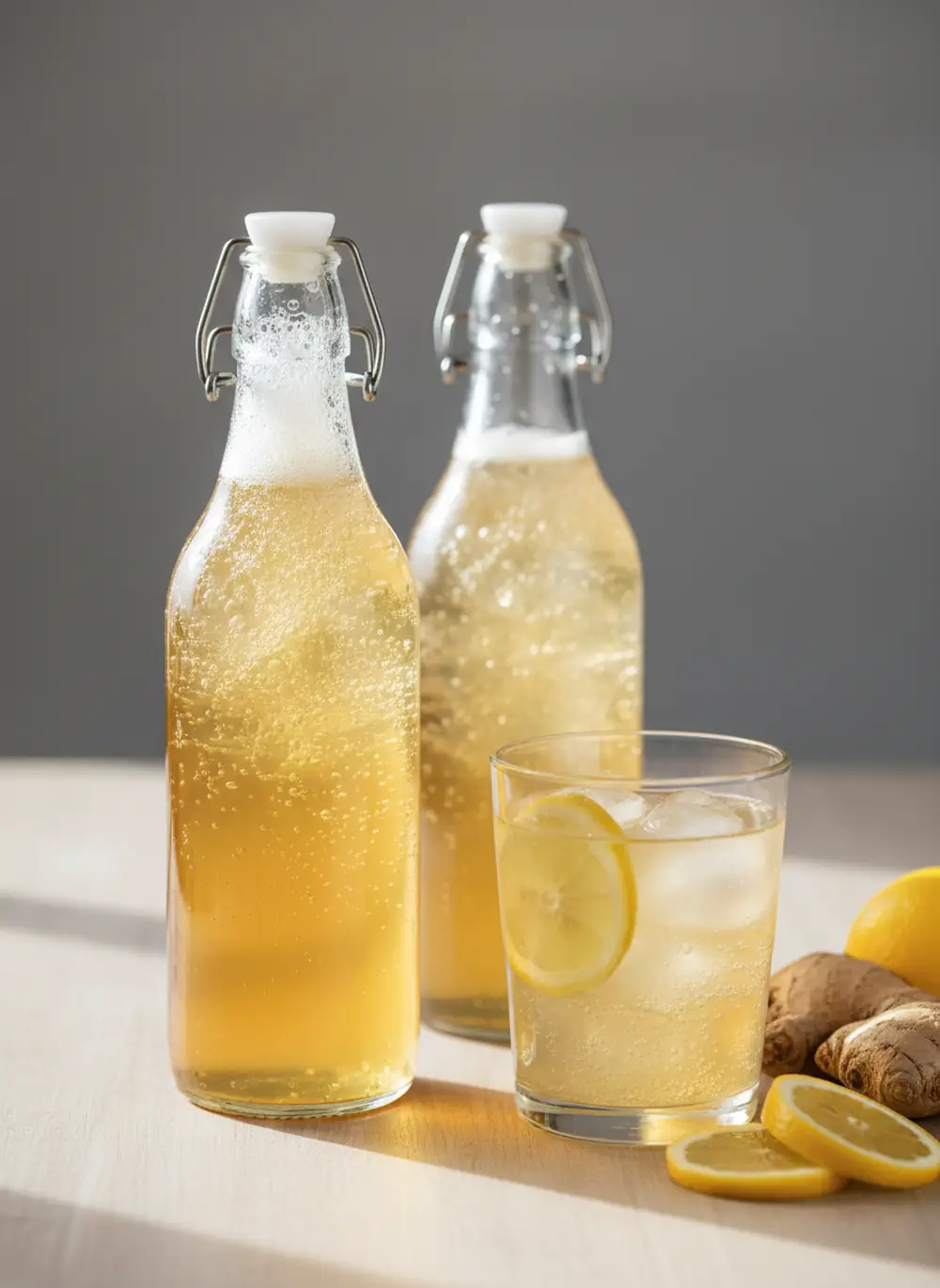
What to expect, day by day
| Day | What you should see | Smell |
|---|---|---|
| 1–2 | Nothing much. Cloudy water, ginger settling to the bottom. | Just ginger |
| 3–4 | First tiny bubbles at the edges. Ginger starting to float. | Faintly yeasty |
| 5–6 | Clear fizz when stirred, bubbles rising on their own. | Yeasty, sharp, gingery |
| 7+ | Ready. Actively bubbling, ginger floating on top. | Like a mild dry cider |
A cool kitchen slows everything down. If you’re at day 8 with no bubbles, move the jar somewhere warmer — on top of the fridge is a classic spot — and keep feeding.
Is it safe? How to tell healthy from spoiled
Wild fermentation is safe when you know what you’re looking at, and this is the part worth reading properly.
| What you see | What it is | What to do |
|---|---|---|
| Bubbles, cloudiness, floating ginger | Healthy, active fermentation | Carry on — this is what you want |
| Thin flat white film on the surface | Kahm yeast — harmless, common | Skim it off and keep going |
| Fuzzy growth — green, black, pink or fuzzy white | Mould | Discard the whole jar. Don’t scoop it out and continue. |
| Slimy or ropey texture | Unwanted bacteria took hold | Discard and start again |
| Smells rotten, putrid or like nail polish | Spoiled | Discard and start again |
| Smells sharp, sour, yeasty, alcoholic | Completely normal | Carry on |
The rule that keeps you safe: flat film is fine, fuzzy is not. If you’re ever genuinely unsure, throw it out and start over — a new bug costs a piece of ginger and a week.
One real hazard worth taking seriously: bottled second ferments build pressure fast. Always use bottles designed for carbonation (flip-top or thick glass), never repurposed wine bottles or jars, “burp” them once a day by briefly opening the cap, and move them to the fridge as soon as they’re fizzy. Over-fermented bottles left at room temperature can burst.
A ginger bug also produces a trace amount of alcohol — typically well under 1% — as a natural by-product. Worth knowing if you’re serving it to children or avoiding alcohol entirely.
How to turn it into soda
- Make a sweetened base: fruit juice, or brewed tea with sugar, or a ginger syrup — roughly 4 cups.
- Cool it to room temperature. Hot liquid will kill the culture on contact.
- Stir in about 1/4 cup of strained ginger bug liquid.
- Bottle in flip-top bottles, leaving an inch of headspace.
- Leave at room temperature 2–4 days, burping daily, until fizzy.
- Refrigerate. Cold slows fermentation right down and stops the pressure building further.
Variations and customizations
- Turmeric bug. Same method with fresh organic turmeric root — earthier, and a spectacular colour.
- Classic ginger ale. Ginger syrup, lemon juice and bug — the drink this whole thing exists for.
- Fruit sodas. Apple, grape or berry juice carbonates beautifully and needs no added sugar.
- Herbal. Cooled hibiscus, mint or lemongrass tea with a little sugar.
- Switchel. Add a splash of apple cider vinegar for the old farmhouse harvest drink.
- Less sweet. Longer second ferments eat more sugar — more fizz, less sweetness.
Common problems and how to fix them
| Problem | Likely Cause | Easy Fix |
|---|---|---|
| No bubbles after a week | Waxed or irradiated ginger | Start again with organic unpeeled ginger. This is the number one cause. |
| Still nothing, and the ginger is organic | Chlorinated water, or the room is too cold | Filtered water only; move somewhere warmer and keep feeding. |
| Started bubbling, then stopped | Underfed — the yeast ran out of sugar | Feed daily without skipping. It’s a living thing. |
| Smells strongly of alcohol | Fermenting fast, often too warm | Normal, but move it somewhere cooler and use it sooner. |
| White film on top | Kahm yeast | Harmless. Skim and continue. |
| Soda won’t carbonate | Bug wasn’t active enough, or base was too hot | Only bottle when the bug fizzes vigorously, and always cool the base first. |
| Bottles fizzing over | Second ferment went too long | Shorter ferment, burp daily, refrigerate as soon as it’s lively. |
Tips for the best results
- Grate, don’t chop. More surface area means more contact between yeast and sugar water, and a faster start.
- Stir every single day. Thirty seconds. Oxygen early on is what builds a strong culture.
- Keep it away from other ferments. Sourdough and kombucha cultures can cross-contaminate a young bug.
- Be patient in winter. A cold kitchen easily doubles the time. It isn’t dead, it’s slow.
Storage and keeping it alive
A ginger bug can live for years with almost no attention. Once it’s established you have two options:
Counter: leave it out and feed 1 tablespoon each of ginger and sugar daily. Ready to use at any time. Best if you make soda often.
Fridge: cover and refrigerate, feeding once a week. It goes dormant and keeps almost indefinitely. Bring it back to room temperature and feed daily for 2–3 days before using.
If you forget it for a few weeks, don’t assume it’s gone — unless there’s fuzzy mould, feed it daily for three days and it will usually come back.
For another slow-living kitchen project, our guide to storing fresh sourdough bread covers the same territory: a living culture, and what to do with the results.
Frequently Asked Questions
Why is my ginger bug not bubbling?
Almost always the ginger. Conventional supermarket ginger is often waxed or irradiated, which kills the wild yeast on the skin that the whole thing depends on. Use organic unpeeled ginger. The next most common cause is chlorinated tap water — use filtered water, or leave tap water out uncovered for 24 hours first. A cold kitchen just makes it slow, not dead.
Do I need to peel the ginger?
No — and you shouldn’t. The wild yeasts and bacteria that ferment your bug live on the skin. Peeling removes the culture. Scrub the root under cold water and grate it whole, skin included.
How do I know if my ginger bug has gone bad?
The rule is: flat film is fine, fuzzy is not. A thin white surface film is kahm yeast — harmless, just skim it. Anything fuzzy, or green, black or pink, is mould, and you should discard the whole jar rather than scooping it out. A slimy texture or a putrid smell also means start over. Sharp, sour, yeasty or faintly alcoholic smells are all normal.
Is a ginger bug alcoholic?
It produces a trace amount of alcohol as a natural by-product of fermentation, typically well under 1% — similar to kombucha. Worth being aware of if you’re serving it to children or avoiding alcohol completely. Longer ferments produce slightly more.
How long does a ginger bug last?
Years, if you feed it. Keep it on the counter with daily feeding for constant use, or in the fridge with weekly feeding for occasional use. Even a neglected bug usually revives with three days of daily feeding, as long as there’s no fuzzy mould.
Can I use honey instead of sugar?
Plain white sugar works best. Honey has natural antibacterial properties that can slow or stall a young culture, and raw or brown sugars ferment more slowly. Once your bug is well established you can experiment, but start it on white sugar.
One jar, endless sodas
A ginger bug is the cheapest interesting thing you can start in your kitchen this week. Organic ginger, sugar, filtered water, and five minutes a day — and at the end of it you have a living culture that turns any sweetened liquid into real soda, for as long as you keep feeding it.