
A whole brisket feeds a crowd, which means almost everyone who smokes or braises one ends up with a fridge container of leftovers the next morning. Reheated straight and served the same way twice in a row, brisket gets old fast — but the fat and connective tissue that make brisket brisket also make it one of the most forgiving leftovers in the kitchen, and it drops into a dozen completely different dinners without much extra work.
The trick is knowing which direction to take it, and how to bring it back to life without drying it out a second time. Below are twelve genuinely different ways to use it up, plus a full recipe for the one that disappears fastest at our house: a griddled brisket grilled cheese with sharp cheddar and a smear of barbecue sauce inside a buttered crust.
What makes leftover brisket so easy to repurpose
Brisket comes from a hard-working muscle that’s loaded with connective tissue, which is exactly why a long, slow first cook turns it tender. That same fat and collagen keep working in your favor on day two — chopped, shredded, or sliced into something else, brisket stays moister through a second reheating than almost any other cut of meat, which is why it holds up so well in fried rice, chili, or a grilled sandwich.
The one mistake that ruins leftover brisket: reheating it hard and dry. Blasting cold brisket in a dry skillet over high heat, or microwaving it uncovered in short blasts, drives out what little moisture is left and turns tender meat into shoe leather. The fix is almost embarrassingly simple — reheat it low and slow with a splash of liquid (broth, water, or the reserved cooking juices if you saved them), covered, so the meat steams gently back to tender instead of scorching dry.
| Method | How | Best For |
|---|---|---|
| Oven, low and slow | 300°F, wrapped in foil with 2–3 tablespoons broth, 20–25 minutes | Sliced brisket you want to serve as-is, or fold into tacos and sandwiches |
| Stovetop, covered | Low heat in a skillet with a splash of broth, lid on, 8–10 minutes | Chopped or shredded brisket going into a quick weeknight dish |
| Simmered in sauce | Added directly to chili, gravy, or barbecue sauce and warmed through | Recipes where the brisket simmers in liquid anyway |
| Microwave (last resort) | Covered with a damp paper towel, 50% power, in short bursts, stirring between | Small portions when you’re in a hurry |
Whichever method you use, reheat brisket that’s been refrigerated to an internal temperature of 165°F if you’re serving it hot, per USDA guidance for cooked meat — and only leave it at room temperature for the two hours it takes to cook and plate, not longer.
12 ways to use leftover brisket
Some of these take fifteen minutes, some make a whole second dinner. All of them taste like a deliberate meal, not a repeat.
| Idea | What It Is | Why It Works |
|---|---|---|
| Brisket grilled cheese | Shredded brisket and sharp cheddar griddled between buttered bread (full recipe below) | The bread crisps while the cheese melts around the meat, so dry reheated brisket disappears into gooey cheese |
| Brisket tacos | Chopped brisket warmed in its juices, piled into charred corn tortillas | A quick simmer in a splash of broth or salsa brings back moisture in minutes |
| Brisket fried rice | Diced brisket stir-fried with day-old rice, egg, and scallions | High heat crisps the edges of the meat instead of drying out the middle, because the rice and egg carry the moisture |
| Brisket chili | Chopped or shredded brisket simmered with beans, tomatoes, and chili spices | A long simmer in liquid is the gentlest possible reheat, so even overcooked leftovers come back tender |
| Brisket breakfast hash | Diced brisket pan-fried with potatoes, peppers, and onion, topped with a fried egg | The potatoes soak up rendered brisket fat, so nothing needs extra oil |
| Brisket quesadillas | Shredded brisket and melted cheese folded into a flour tortilla, griddled crisp | Same principle as the grilled cheese — cheese and a hot dry surface, not direct dry heat on the meat |
| Loaded brisket baked potatoes | A baked potato split and piled with warmed brisket, cheese, and sour cream | The hot potato gently warms the meat resting on top instead of blasting it |
| Brisket ramen | Sliced brisket added to a quick doctored ramen broth with soft-boiled egg and scallions | The hot broth reheats paper-thin slices almost instantly without ever drying them out |
| Brisket nachos | Chopped brisket layered over tortilla chips with cheese and broiled until melted | The broiler only needs seconds once the cheese is the target, so the meat barely dries at all |
| Brisket shepherd’s pie | Chopped brisket and gravy under a layer of mashed potatoes, baked until golden | Baked under gravy and potato, the meat is fully insulated from direct oven heat |
| Brisket baked beans | Diced brisket stirred into canned or homemade baked beans and warmed through | The beans’ liquid does the reheating work; the smoky brisket flavor goes straight into the sauce |
| Brisket stuffed peppers | Bell peppers filled with chopped brisket, rice, and cheese, then baked | The pepper acts like a steamer, trapping moisture around the filling as it bakes |
How to make it
- Warm the shredded brisket briefly in a skillet with a splash of barbecue sauce or broth so it’s hot and moist before it hits the bread.
- Butter one side of each bread slice and layer cheese, brisket, and more cheese between the dry sides.
- Griddle over medium-low heat, pressing gently, until the first side is deep golden brown.
- Flip carefully and cook the second side until golden and the cheese has fully melted, then slice and serve hot.
Brisket Grilled Cheese
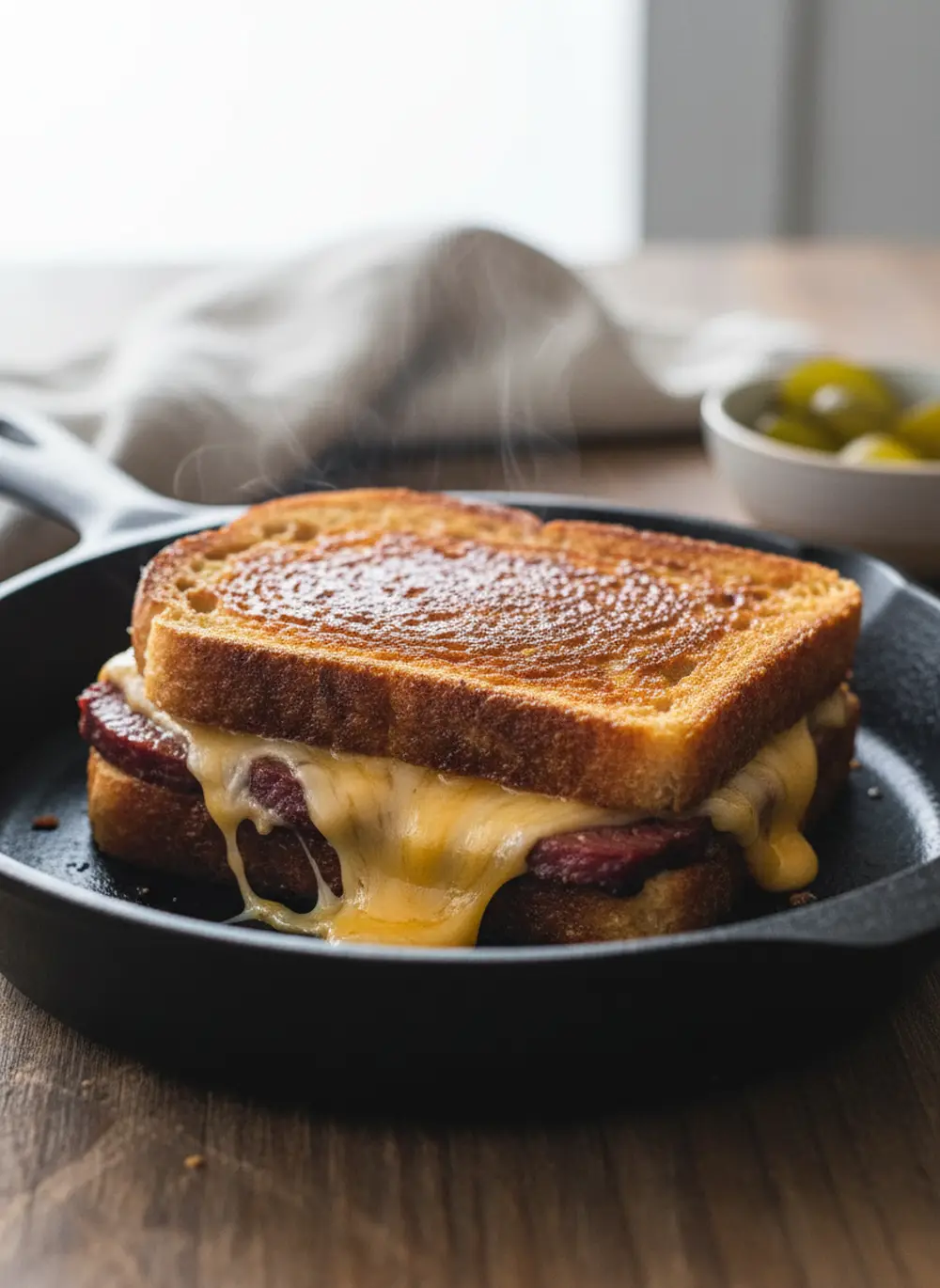
Leftover brisket warmed in barbecue sauce, then griddled inside a buttery, cheese-loaded sandwich until it’s crisp outside and pulls apart in strings inside.
Ingredients
- 1 1/2 cups leftover brisket, shredded or thinly sliced
- 2 tablespoons barbecue sauce, plus extra for serving
- 4 slices sturdy sandwich bread (sourdough or Texas toast)
- 3 tablespoons unsalted butter, softened
- 4 slices sharp cheddar
- 1/2 cup shredded Monterey Jack
- 1/4 small red onion, thinly sliced (optional)
Instructions
- Warm the brisket in a small skillet over low heat with the barbecue sauce, stirring, until it’s hot and coated, about 3 minutes. Set aside.
- Butter one side of each of the 4 bread slices.
- Place 2 slices butter-side down. Layer a slice of cheddar, half the warmed brisket, the red onion if using, half the Monterey Jack, and another slice of cheddar on each.
- Top with the remaining bread, butter-side up.
- Heat a large skillet or griddle over medium-low heat. Add the sandwiches and cook 4–5 minutes per side, pressing gently with a spatula, until deep golden brown and the cheese is fully melted.
- Reduce heat if the bread is browning faster than the cheese is melting — low and slow gets a fully melted center without a burnt crust.
- Rest 1 minute, then slice in half and serve hot with extra barbecue sauce for dipping.
How long leftover brisket keeps
| Storage | How Long | Notes |
|---|---|---|
| Refrigerator | 3–4 days | Store in an airtight container, ideally with a little of the cooking liquid or broth to keep it moist |
| Freezer (whole or sliced) | Up to 3 months | Wrap tightly in foil, then a freezer bag, pressing out excess air |
| Freezer (in sauce, e.g. chili) | Up to 3 months | Freezes and reheats even better than plain meat, since the sauce protects it from drying |
| Thawing | Overnight in the fridge | Avoid thawing at room temperature; slow thawing keeps more moisture in the meat |
Refrigerate leftover brisket within two hours of cooking, per USDA food-safety guidance for cooked meats — sooner if your kitchen runs warm. Cutting it into smaller portions before storing also means faster, more even cooling in the fridge.
Common problems and how to fix them
| Problem | Likely Cause | Easy Fix |
|---|---|---|
| Brisket tastes dry after reheating | Reheated uncovered, at high heat, or with no added liquid | Reheat covered, at low heat, with a splash of broth or sauce |
| Grilled cheese bread burns before cheese melts | Heat too high | Drop to medium-low and cook longer — a slower melt beats a fast burn every time |
| Fried rice or hash tastes greasy | Didn’t trim excess surface fat from the brisket before dicing | Trim visible fat cap off cold brisket before repurposing; a little marbled fat is plenty |
| Chili or beans taste flat | Brisket was reheated separately first, losing flavor into the pan | Add cold or lightly warmed brisket straight into the simmering sauce so the flavor stays in the pot |
| Meat falls apart too much to slice | Overcooked originally, or reheated at too high a temperature | Lean into it — shred it instead of slicing and use it in tacos, hash, or fried rice where texture doesn’t matter |
Variations and customizations
- Spicy brisket grilled cheese. Add pickled jalapeños and a smear of chipotle mayo along with the barbecue sauce.
- Brisket melt on Texas toast. Use thick-cut Texas toast instead of sandwich bread for an extra-crisp, sturdier crust.
- Open-faced version. Skip the top slice of bread and finish under the broiler for 1–2 minutes to melt the cheese, watching closely.
- Brisket and caramelized onion grilled cheese. Swap the raw red onion for onions slowly caramelized in butter for a sweeter, deeper sandwich.
- Low-carb swap. Skip the bread entirely and melt the cheese and brisket together in a skillet for a quick brisket queso instead.
Tips for the best results
- Trim the fat cap before repurposing. A little rendered fat adds flavor; too much makes fried rice, hash, and quesadillas taste greasy.
- Chop cold brisket, not warm. It holds together better and dices more cleanly straight from the fridge.
- Save the cooking liquid or jus if you have it. A spoonful added during reheating does more for moisture than water or broth alone.
- Match the size of the pieces to the dish. Shred for tacos and sandwiches, dice for hash and fried rice, slice thin for ramen.
Looking for more ways to make the most of a big cut of beef? Our arm roast beef and New York steak roast both reheat well using the same low-and-slow method above, and our venison roast shares brisket’s same lean-into-the-fat-and-connective-tissue logic.
Frequently Asked Questions
What is the best way to reheat leftover brisket without drying it out?
Reheat it low and slow, covered, with a splash of broth, water, or the reserved cooking liquid. In the oven that means 300°F wrapped in foil for 20–25 minutes; on the stovetop, low heat in a covered skillet for 8–10 minutes. Avoid uncovered high heat, which is what dries brisket out on the second day.
How long does leftover brisket last in the fridge?
3–4 days in an airtight container. Store it with a little broth or cooking liquid if you have it, which helps it reheat moister later.
Can you freeze leftover brisket?
Yes, for up to 3 months. Wrap it tightly in foil and then a freezer bag, pressing out excess air, and thaw it overnight in the refrigerator rather than at room temperature.
What temperature should reheated brisket reach?
165°F internal temperature if you’re serving it hot on its own, per USDA guidance for reheating cooked meat. Brisket simmered into a sauce, chili, or soup will naturally reach that temperature as the dish comes up to a simmer.
What can I make with a small amount of leftover brisket?
Quesadillas, tacos, or a grilled cheese all work well with as little as a cup of leftover brisket, since the cheese and tortilla or bread stretch it into a full portion. Fried rice and hash are better options once you have at least two cups.
Is leftover brisket good for meal prep?
Yes — chopped brisket portioned into containers with rice or potatoes and a vegetable reheats well for up to 4 days and holds its texture better than most other leftover meats, thanks to its higher fat content.
One brisket, a week of dinners
A single leftover brisket can carry you through tacos, fried rice, a pot of chili, and at least one round of the grilled cheese above before it’s gone — and none of it will taste like a repeat, as long as you reheat it gently instead of blasting it dry. Keep a splash of broth or the reserved cooking liquid on hand, match the cut of the meat to the dish, and the second week of a brisket can be just as good as the first night.