
A New York steak roast is the most impressive thing you can put on a table with the least amount of skill required. It is a whole New York strip loin — the same muscle your favourite steak is cut from — roasted in one piece, then sliced into thick, rosy steaks at the table. Deep brown herb crust on the outside, edge-to-edge pink inside, and no carving skill needed.
You may also see it called a NY strip steak roast, strip loin roast, or top loin roast. Same cut, same method, same result. This is the roast we make for Christmas, birthdays, and any night that needs to feel like an occasion — and the reverse-sear method below makes overcooking almost impossible.
What makes a New York steak roast so good?
Most roasts force a compromise. Cook a prime rib or a sirloin the traditional way — hot oven from the start — and you get a grey band of overdone meat around a pink centre. The outside slices are always sadder than the middle ones.
The strip loin fixes that, because it is a uniform cylinder of meat with almost no tapering. Every slice is the same thickness and cooks at the same rate. Pair that shape with the reverse sear — low oven first, hard sear last — and the roast comes out the same colour from edge to edge. No grey band at all.
The most common mistake is cooking to time instead of temperature. Every roast is a different thickness, every oven runs differently, and a 30-minute error is the difference between a beautiful medium-rare and an expensive grey brick. A $15 instant-read thermometer is genuinely the difference between a good cook and a great one here. There is no visual cue that replaces it.
The second mistake is salting right before it goes in the oven. Salt needs time to travel. Salted 12–24 hours ahead and left uncovered in the fridge, it seasons the meat all the way through and dries the surface so it browns properly. Salted five minutes ahead, it just sits on top and draws moisture out at exactly the wrong moment.
Key ingredients and why they matter
Full amounts are in the recipe card — these are the ones worth getting right:
| Key Ingredient | What To Use | Why It Matters |
|---|---|---|
| New York strip loin | 4–5 lb whole boneless roast, fat cap left on | The uniform shape is the whole point — it cooks evenly end to end. Ask the butcher for a centre-cut piece. |
| Fat cap | Trimmed to about 1/4 inch | Bastes the roast as it renders. Trimmed off completely, the top dries out; left thick, it never renders. |
| Kosher salt | Coarse, applied 12–24 hours ahead | Seasons through the meat and dries the surface for a better crust. This is the single biggest upgrade. |
| Garlic and fresh herbs | Rosemary, thyme, lots of garlic | Rubbed on before roasting they perfume the fat. Woody herbs survive the heat; delicate ones burn. |
| High-smoke-point oil | Avocado, grapeseed, or beef tallow | The final sear runs hot. Olive oil and butter burn and turn bitter at that temperature. |
| Butter | Unsalted, for basting during the sear | Added at the end only. It browns beautifully in the last two minutes without burning. |
How to make a New York steak roast
Four stages, and only one of them needs your attention:
- Dry brine. Salt the roast all over, set it on a rack, and leave it uncovered in the fridge overnight.
- Slow roast. 225°F until the centre hits your pull temperature. About 2 hours for a 4 lb roast — but go by the thermometer, not the clock.
- Rest. 20 minutes on the counter. The temperature evens out and the juices settle.
- Sear. Rip-roaring hot pan, 60–90 seconds a side, butter and garlic at the end. Slice and serve immediately.
New York Steak Roast (NY Strip Roast)
A whole New York strip loin, dry-brined and reverse-seared for an edge-to-edge rosy centre and a deep garlic-herb crust.
Ingredients
- 1 whole New York strip loin roast, 4–5 lb, fat cap trimmed to 1/4 inch
- 1 tablespoon kosher salt (about 1 teaspoon per pound)
- 2 teaspoons coarsely ground black pepper
- 6 cloves garlic, minced
- 1 tablespoon fresh rosemary, chopped
- 1 tablespoon fresh thyme leaves
- 2 tablespoons avocado oil or other high-smoke-point oil, divided
- 3 tablespoons unsalted butter
- 4 cloves garlic, smashed but whole, for basting
- 2 sprigs rosemary, for basting
- Flaky sea salt, for finishing
Instructions
- The day before: pat the roast completely dry and rub it all over with the kosher salt. Set it on a rack over a tray and refrigerate uncovered for 12–24 hours. Do not skip this — it seasons the meat through and dries the surface for browning.
- Take the roast out 1 hour before cooking. Mix the pepper, minced garlic, rosemary, thyme and 1 tablespoon of the oil into a paste and rub it over the whole surface.
- Heat the oven to 225°F (110°C). Set the roast fat side up on a rack in a roasting tray and insert a probe thermometer into the thickest part, or plan to check with an instant-read.
- Roast until the centre reaches your pull temperature — 120°F for medium-rare (see the doneness table below). This takes roughly 2 to 2.5 hours for a 4–5 lb roast, but start checking an hour early. Temperature decides, not time.
- Transfer to a board and rest 20 minutes, loosely tented with foil. The roast can sit up to 45 minutes here, which makes the timing forgiving for guests.
- Just before serving, heat the remaining oil in a large heavy skillet over high heat until it just begins to smoke. Sear the roast 60–90 seconds per side, turning to catch every surface, until deeply browned.
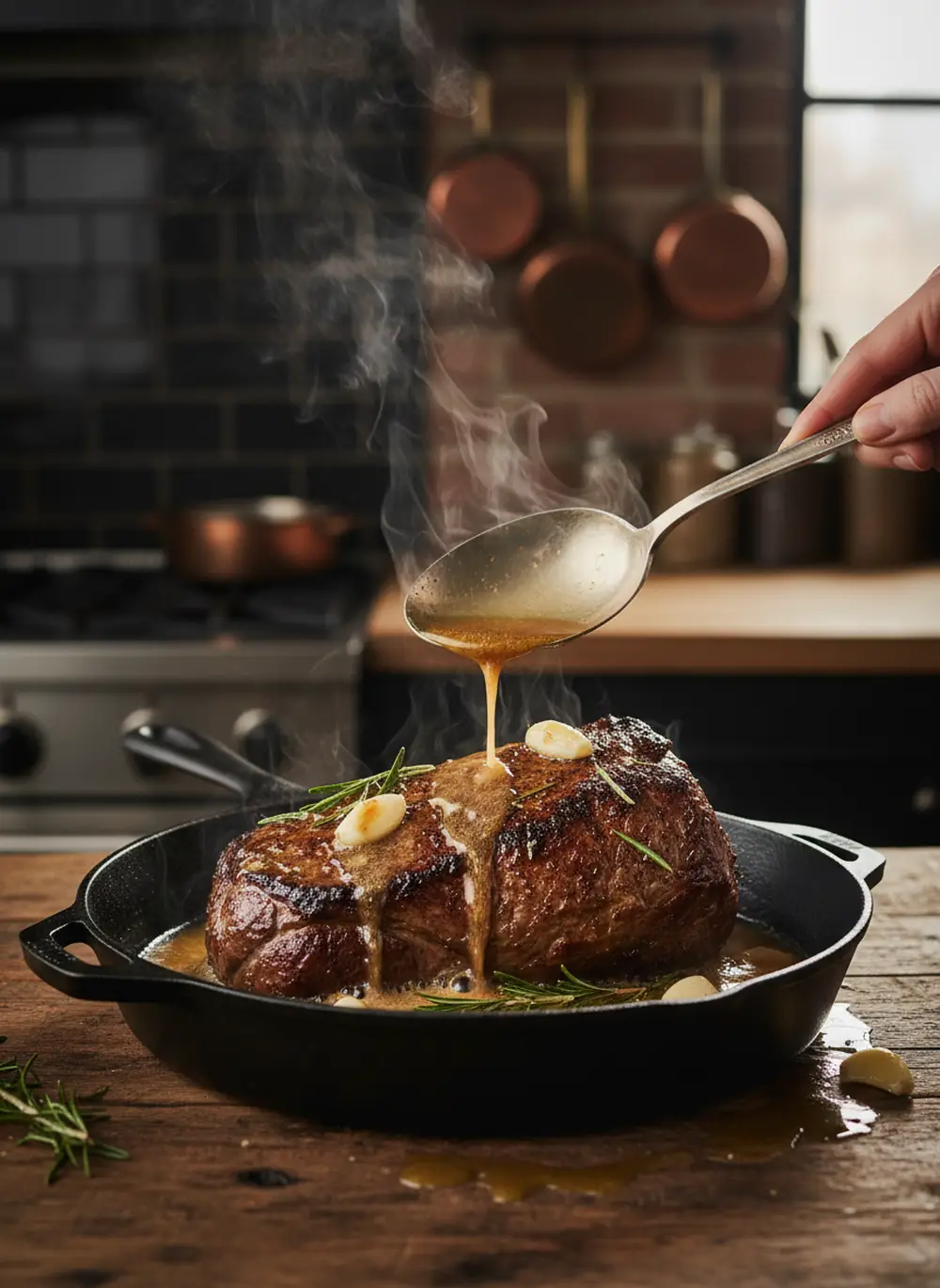
- Drop in the butter, smashed garlic and rosemary sprigs. Tilt the pan and spoon the foaming butter over the roast for about 45 seconds.
- Move to a board, sprinkle with flaky salt, and slice across the grain into thick steaks. Spoon the pan butter over the slices and serve straight away.
Doneness temperatures
This is the only table that really matters. With the reverse sear, pull the roast about 10°F below your target — the rest and the sear together carry it the rest of the way.
| Doneness | Pull From Oven | Final Temperature | What It Looks Like |
|---|---|---|---|
| Rare | 110°F | 120–125°F | Deep red, very soft |
| Medium-rare (recommended) | 120°F | 130–135°F | Rosy pink throughout, juicy and tender |
| Medium | 130°F | 135–145°F | Light pink centre, firmer |
| Medium-well | 140°F | 145–150°F | Barely pink, noticeably drier |
| Well done | 150°F | 155°F+ | No pink — not recommended for this cut |
For food safety, the USDA recommends whole cuts of beef reach an internal temperature of 145°F followed by a three-minute rest. Lower temperatures are a matter of personal preference — cook to the level you are comfortable with, and take extra care when serving anyone pregnant, elderly, very young, or immunocompromised.
Roast size and timing
Rough guide at 225°F to a 120°F pull. Always confirm with a thermometer:
| Roast Weight | Approximate Time | Serves |
|---|---|---|
| 3 lb | 1 hr 30 min – 1 hr 50 min | 6 |
| 4 lb | 1 hr 50 min – 2 hr 15 min | 8 |
| 5 lb | 2 hr 15 min – 2 hr 40 min | 10 |
| 6 lb | 2 hr 40 min – 3 hr 10 min | 12 |
Thickness matters more than weight — a long thin roast cooks faster than a short thick one of the same weight. Start checking an hour before you expect it to be ready.
Variations and customizations
- Peppercorn crust. Press coarsely cracked black peppercorns over the whole surface before roasting for a steakhouse au poivre finish.
- Horseradish cream. Fold prepared horseradish into sour cream with a little lemon and chives. The classic partner for beef.
- Red wine pan sauce. After searing, deglaze the skillet with red wine and beef stock, reduce by half, finish with cold butter.
- Blue cheese butter. Mash crumbled blue cheese into softened butter and melt a disc over each slice.
- Grill it. Set up two zones, roast over indirect heat until the pull temperature, then sear directly over the coals.
- Smaller crowd. The method works on a 2 lb piece — just start checking the temperature after 50 minutes.
Common problems and how to fix them
| Problem | Likely Cause | Easy Fix |
|---|---|---|
| Grey band around the edge | Oven too hot | Keep it at 225°F. High heat cooks the outside long before the centre is ready. |
| Crust never browned | Wet surface, or sear pan not hot enough | Dry brine uncovered overnight, and heat the pan until the oil just smokes before the roast goes in. |
| Overcooked past medium-rare | Cooked to time instead of temperature | Use an instant-read thermometer and start checking an hour early. There’s no way to undo it. |
| Meat is tough and chewy | Sliced with the grain | Find the direction the muscle fibres run and cut across them, not along them. |
| Juices ran all over the board | Sliced too soon | Rest 20 minutes after roasting. The sear is quick enough that it doesn’t need a second rest. |
| Bitter, burnt-tasting crust | Olive oil or butter used for the sear | Sear in a high-smoke-point oil and add butter only in the final 45 seconds. |
Tips for the best results
- Buy a probe thermometer. One that stays in the roast and alarms at your target temperature removes every guess from this recipe.
- Ask for a centre-cut roast. The tapered end pieces cook unevenly. A centre cut is worth asking the butcher for.
- The rest is your friend. The roast holds beautifully for up to 45 minutes before searing, so you can time it around guests rather than the other way round.
- Sear last, serve immediately. Unlike most roasts, this one goes straight from the pan to the board to the table.
What to serve with it
Creamy mashed or roasted potatoes, something green and sharp to cut the richness, and a good crusty bread for the pan butter. Our arm roast beef recipe is the slow-cooked, budget-friendly cousin of this dish if you want the same comfort on a weeknight, and the horseradish cream above works for both.
Storage and leftovers
Wrap leftover slices tightly and refrigerate for up to 4 days. Cold strip roast is genuinely excellent — it makes the best steak sandwich you will ever have, piled on a crusty roll with horseradish cream and rocket.
If you want to reheat it, do it gently: 250°F oven, covered, just until warmed through. A microwave will take a perfect medium-rare slice straight to well done in under a minute. Better still, warm the slices for a few seconds in the leftover pan butter.
The roast freezes well cooked and sliced — wrap tightly for up to 3 months and thaw overnight in the fridge. Leftovers are also brilliant chopped into fried rice, tacos, or a steak salad the next day.
If you end up with extra meat after this one, our leftover brisket recipes roundup has twelve ways to use it up, including a grilled cheese that works just as well with leftover roast.
Frequently Asked Questions
What cut is a New York steak roast?
It’s a whole boneless New York strip loin — the same muscle that New York strip steaks are cut from, left in one piece and roasted whole. You may see it labelled NY strip roast, strip loin roast, or top loin roast. They’re all the same thing.
What is the reverse sear, and why use it here?
You roast low and slow first, then sear at the very end instead of the beginning. Because the meat cooks gently and evenly, you get the same rosy colour from edge to edge with no overcooked grey band — and the final blast of heat builds the crust in 90 seconds.
Do I really need to salt it a day ahead?
It’s the single biggest upgrade you can make. Salt applied 12–24 hours ahead seasons the meat all the way through and dries the surface so it browns properly. If you’re short on time, salting even 2 hours ahead helps — but overnight is noticeably better.
What internal temperature should a NY strip roast be?
For medium-rare, pull it from the oven at 120°F and it will finish at 130–135°F after resting and searing. The USDA recommends 145°F with a three-minute rest for whole cuts of beef; anything below that is a personal preference, so cook to the level you’re comfortable serving.
How far ahead can I cook it?
The roast can rest for up to 45 minutes between coming out of the oven and being seared, which makes hosting much easier. Do the slow roast ahead, then sear and slice right before you serve.
How much roast do I need per person?
Plan on about half a pound per person for a main course — a 4 lb roast comfortably serves 8. Buy a little extra if you want leftovers, because cold strip roast makes an outstanding steak sandwich.
Bring it to the table
Edge-to-edge pink, a dark garlic-herb crust, and thick steaks carved at the table — a New York steak roast looks like the hardest thing you have ever cooked and asks almost nothing of you beyond a thermometer and a little patience. Save it for your next celebration and let us know how it turned out.