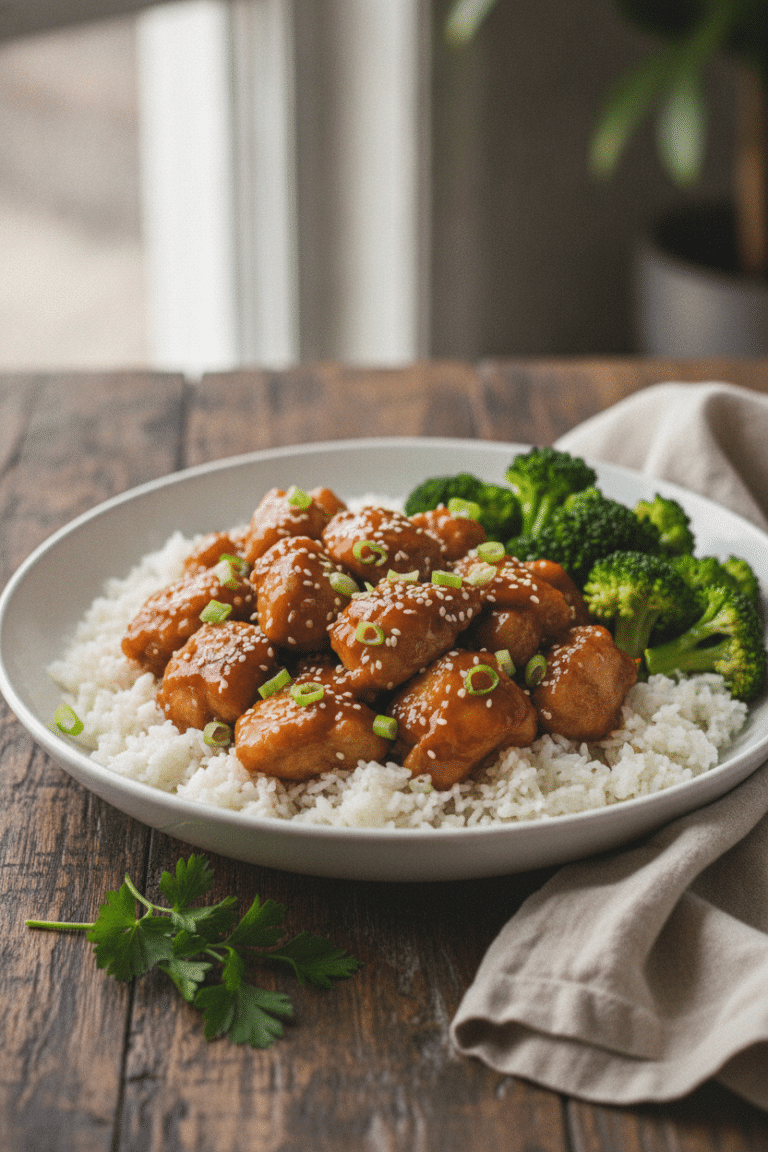

Panda Express kung pao chicken is the one on the counter that always looks better than it has any right to — glossy diced chicken, bright zucchini and red pepper, whole dried chillies, and peanuts that stay crunchy in the sauce.
It takes about 25 minutes at home, and it costs a fraction of the takeout. But there is one restaurant technique standing between a good copycat and a great one, and almost every home recipe leaves it out.
What makes Panda Express kung pao chicken so good?
Two things, and neither is the sauce.
The first is velveting. Chinese restaurants toss diced chicken in cornstarch and egg white before it ever touches the pan. That coating forms a thin barrier that holds moisture in, so the chicken comes out silky and tender instead of dry and stringy — even though it was cooked over ferocious heat. It takes ten extra minutes and it is the entire difference between “nice stir fry” and “tastes like the restaurant”.
The second is heat. Restaurant woks run far hotter than a home hob, which is why takeout has that faintly smoky edge. You can get most of the way there by using your widest pan, getting it properly hot before anything goes in, and cooking in two batches instead of one.
Which leads to the most common mistake: crowding the pan. Tip all the chicken in at once and the temperature crashes, liquid pools, and the meat steams grey instead of browning. Two batches takes four extra minutes and changes the result completely.
The second mistake is adding the peanuts too early. They go in at the very end, off the heat or nearly. Simmer them in the sauce and they turn soft, which loses the contrast that makes this dish work.
Key ingredients and why they matter
| Key Ingredient | What To Use | Why It Matters |
|---|---|---|
| Chicken thighs | Boneless skinless, diced into 3/4-inch cubes | Thighs stay juicy at high heat. Breast works but dries out fast — if you use it, cut the cooking time. |
| Cornstarch | For velveting and for the sauce | Does two separate jobs: tenderises the chicken, then thickens the sauce to that glossy restaurant coating. |
| Zucchini and red bell pepper | Diced to roughly the same size as the chicken | This is what makes it Panda Express kung pao specifically — the traditional Sichuan version uses neither. |
| Dried red chillies | Whole, left whole | They perfume the oil without making the dish genuinely hot. Left whole they’re easy to eat around. |
| Roasted peanuts | Unsalted, added at the very end | The crunch is half the dish. Added early they go soft. |
| Rice vinegar | Unseasoned | Cuts the sweetness and stops the sauce tasting flat. Don’t skip it. |
How to make it
- Velvet the chicken — cornstarch, egg white, a splash of soy. Ten minutes while you chop.
- Whisk the sauce in a jug so it’s ready to pour; there’s no time once the pan is hot.
- Sear the chicken in two batches over high heat, then set it aside.
- Vegetables, sauce, chicken back in, peanuts last. Under five minutes.
Copycat Panda Express Kung Pao Chicken
Velveted chicken, zucchini, red pepper and peanuts in a glossy sweet-savoury sauce — ready in 25 minutes.
Ingredients
- 1 1/2 lb boneless skinless chicken thighs, cut into 3/4-inch cubes
- 1 egg white
- 2 tablespoons cornstarch, for velveting
- 1 tablespoon soy sauce, for velveting
- 3 tablespoons neutral oil, divided
- 1 medium zucchini, diced
- 1 red bell pepper, diced
- 8–10 whole dried red chillies
- 3 cloves garlic, minced
- 1 tablespoon fresh ginger, minced
- 1/2 cup roasted unsalted peanuts
- 1/4 cup soy sauce, for the sauce
- 2 tablespoons rice vinegar
- 2 tablespoons brown sugar
- 1 tablespoon toasted sesame oil
- 1/2 cup chicken stock
- 1 tablespoon cornstarch, for the sauce
Instructions
- Velvet the chicken: toss the diced chicken with the egg white, 2 tablespoons cornstarch and 1 tablespoon soy sauce until every piece is coated in a thin slick. Leave it for 10 minutes while you prepare everything else. Do not skip this — it’s what keeps the chicken tender.
- Whisk the sauce ingredients together in a jug: the 1/4 cup soy sauce, rice vinegar, brown sugar, sesame oil, chicken stock and 1 tablespoon cornstarch. Set it beside the hob. Once the pan is hot there is no time to measure.
- Heat a large wok or your widest skillet over high heat until it’s properly hot. Add 1 1/2 tablespoons of the oil and swirl to coat.
- Add half the chicken in a single layer and leave it alone for 2 minutes to brown, then toss and cook another minute until just cooked through. Transfer to a plate and repeat with the remaining oil and chicken. Cooking in two batches keeps the pan hot enough to sear rather than steam.
- Turn the heat to medium-high. Add the dried chillies and let them sizzle for 30 seconds until fragrant — don’t let them blacken or the oil turns bitter.
- Add the garlic and ginger and stir for 20 seconds, then the zucchini and bell pepper. Stir-fry 2–3 minutes, until the vegetables are bright and just tender but still have bite.
- Whisk the sauce once more (the cornstarch settles) and pour it in. Bring to a simmer and stir for about a minute, until it thickens and turns glossy enough to coat a spoon.
- Return the chicken and any resting juices to the pan and toss for another minute until everything is coated and heated through.
- Take the pan off the heat and stir in the peanuts last, so they stay crunchy. Serve immediately over steamed rice.
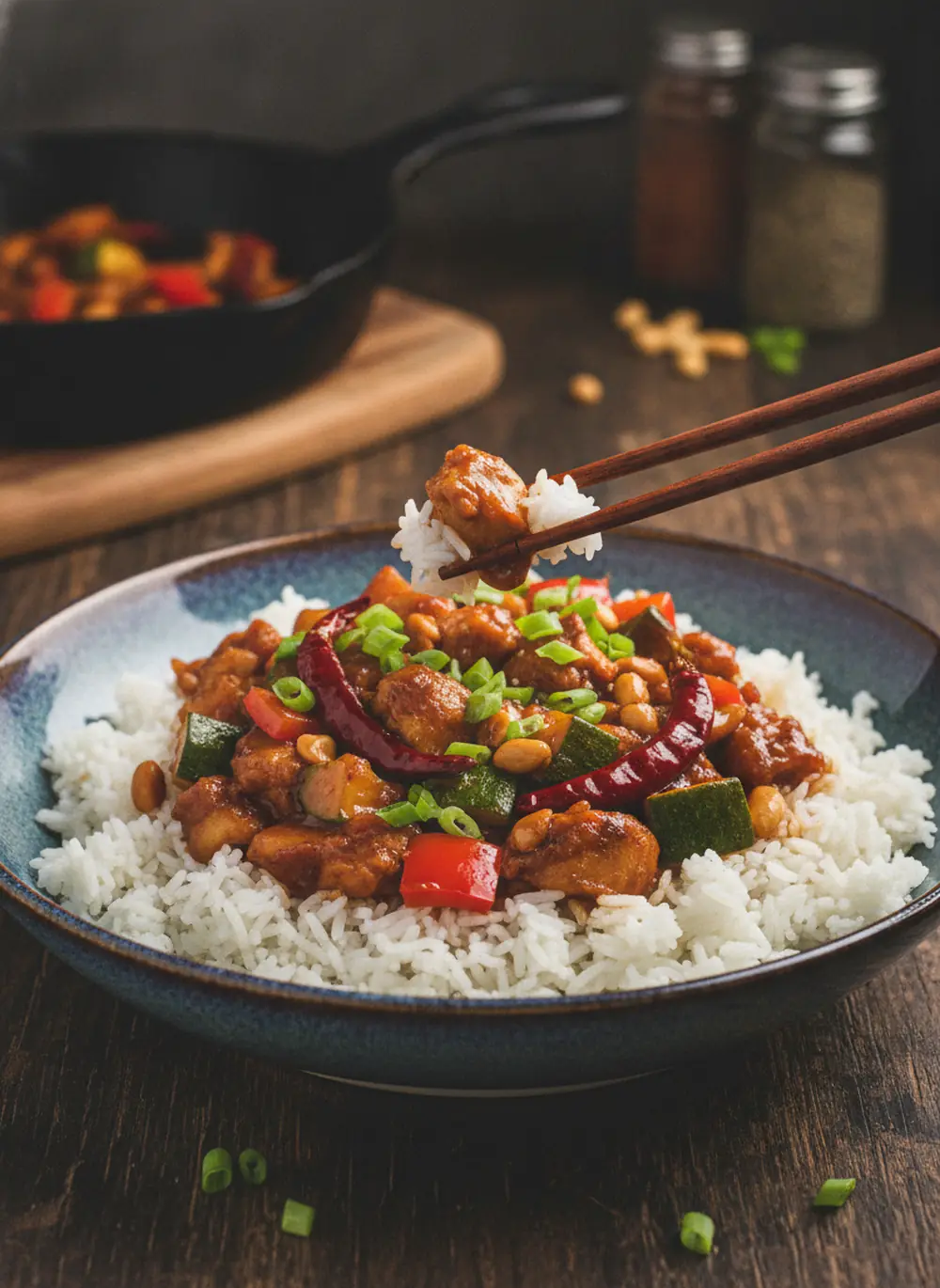
Velveting: the technique that makes it taste like takeout
If you only change one thing about how you stir-fry, make it this.
Velveting is coating raw meat in a starch mixture before cooking. The starch and egg white form a thin film that sets instantly in hot oil, sealing the surface. Moisture stays inside the chicken instead of escaping into the pan, so it stays silky even after high-heat cooking. Every Chinese restaurant does it. Almost no home recipe mentions it.
| Velveted | Not velveted | |
|---|---|---|
| Texture | Silky, tender, slightly springy | Firm, drier, sometimes stringy |
| Sauce | Clings to every piece | Slides off, pools in the pan |
| Extra effort | 10 minutes, mostly hands-off | — |
Ten minutes is enough. Thirty is better if you have it, and you can velvet the chicken in the morning and leave it covered in the fridge until dinner.
Panda Express vs traditional Sichuan kung pao
They share a name and not much else, and it’s worth knowing which one you’re making.
| Panda Express style | Traditional Sichuan | |
|---|---|---|
| Vegetables | Zucchini and red bell pepper | Usually just chillies and scallion |
| Sichuan peppercorns | None | Essential — gives the numbing tingle |
| Heat level | Mild; chillies flavour the oil | Genuinely hot and numbing |
| Sauce | Sweeter, thicker, glossier | Sharper, thinner, more vinegar-forward |
| Nut | Peanuts | Peanuts |
This recipe is the Panda Express version — the mild, sweet-savoury one most people mean when they search for it. To take it toward the traditional side, add a teaspoon of crushed Sichuan peppercorns with the garlic and drop the zucchini.
Variations and customizations
- Spicier. Break two or three of the dried chillies open before they go in — the seeds are where the heat lives.
- Chicken breast. Works fine if you velvet it. Cut the sear to 90 seconds a side, since breast dries out much faster than thigh.
- Extra vegetables. Diced celery, water chestnuts or snap peas all fit the texture of the dish.
- Cashews instead of peanuts. Technically then it’s kung pao’s cousin, but it’s very good.
- Gluten-free. Swap the soy sauce for tamari — everything else is already gluten-free.
- Lower sugar. Halve the brown sugar. The sauce is less glossy but much closer to the traditional version.
Common problems and how to fix them
| Problem | Likely Cause | Easy Fix |
|---|---|---|
| Chicken is dry and stringy | Not velveted, or overcooked | Velvet it, and pull it the moment it’s cooked through — it goes back in the pan later anyway. |
| Chicken steamed grey instead of browning | Pan crowded, or not hot enough | Two batches, widest pan, and wait until it’s genuinely hot before the oil goes in. |
| Sauce stayed thin and watery | Cornstarch settled in the jug | Whisk again right before pouring, and let it simmer a full minute to activate. |
| Sauce turned gluey | Too much cornstarch, or simmered too long | Loosen it with a splash of stock; take it off the heat as soon as it coats a spoon. |
| Soggy peanuts | Added before the sauce | Off the heat, at the very end, always. |
| Bitter, acrid taste | Dried chillies burned | 30 seconds is all they need. Lower the heat before they go in. |
| Vegetables went limp | Cooked too long | 2–3 minutes only — they carry on softening in the sauce. |
Tips for the best results
- Prep everything before you turn on the heat. Stir-frying takes five minutes start to finish; there is no chopping time once it begins.
- Dice everything the same size as the chicken. It cooks evenly and it’s what gives the dish its neat takeout look.
- Use your widest pan. Surface area matters more than whether it’s a wok — a large skillet beats a small wok every time.
- Velvet ahead. Do it in the morning and dinner becomes a ten-minute job.
What to serve with it
Steamed jasmine rice is the default, and fried rice makes it a full takeout spread. Something crisp and cold alongside balances the sweetness — our Din Tai Fung cucumber salad is exactly that, and takes ten minutes. If you’re building a copycat night, our Raising Cane’s chicken fingers use the same principle: one restaurant technique done properly at home.
Storage and reheating
Refrigerate leftovers in an airtight container for up to 3 days. The peanuts soften overnight — if that bothers you, hold some back and add fresh ones when reheating.
Reheat in a hot pan for 2–3 minutes rather than the microwave, which turns the chicken rubbery and the vegetables limp. A splash of water or stock loosens the sauce as it warms.
It freezes acceptably for up to 2 months, though the zucchini softens noticeably on thawing. If you know you’re freezing a batch, leave the zucchini out and add it fresh when you reheat.
Frequently Asked Questions
What is velveting and do I really need it?
Velveting is coating the raw chicken in cornstarch and egg white before cooking. The coating sets in the hot pan and seals moisture inside, which is why restaurant stir-fry chicken is silky rather than dry. It adds 10 mostly hands-off minutes and it’s the single biggest difference between a home stir-fry and a takeout one. You can skip it, but this is the step that makes the recipe worth making.
Is Panda Express kung pao chicken spicy?
Not very. The whole dried chillies flavour the oil rather than releasing much heat into the sauce, and unlike traditional Sichuan kung pao there are no Sichuan peppercorns, so there’s no numbing tingle. For more heat, break a few chillies open so the seeds get into the sauce.
Can I use chicken breast instead of thighs?
Yes, and it’s a common swap. Velvet it exactly the same way and cut the searing time to about 90 seconds per batch — breast dries out much faster than thigh at high heat. Thighs are more forgiving if you’re new to stir-frying.
Why is my chicken grey instead of browned?
The pan was crowded or not hot enough. When too much chicken goes in at once the temperature drops, liquid escapes, and the meat steams rather than sears. Cook in two batches in your widest pan and let it get properly hot first.
What’s the difference between kung pao chicken and Panda Express kung pao?
Panda Express adds zucchini and red bell pepper, leaves out Sichuan peppercorns, and uses a sweeter, thicker sauce. Traditional Sichuan kung pao is hotter, sharper, more vinegar-forward, and has the distinctive numbing tingle from the peppercorns. Both use peanuts.
Can I make it ahead?
Velvet the chicken and whisk the sauce in the morning, keep both covered in the fridge, and dinner takes ten minutes. The finished dish is best fresh — reheat leftovers in a hot pan rather than the microwave, and add fresh peanuts for the crunch.
Better than the drive-through
Panda Express kung pao chicken is one of the easiest takeout dishes to beat at home, because the gap between homemade and restaurant is one technique rather than a long ingredient list. Velvet the chicken, keep the pan hot, add the peanuts last — and you’ll have it on the table faster than the queue moves.