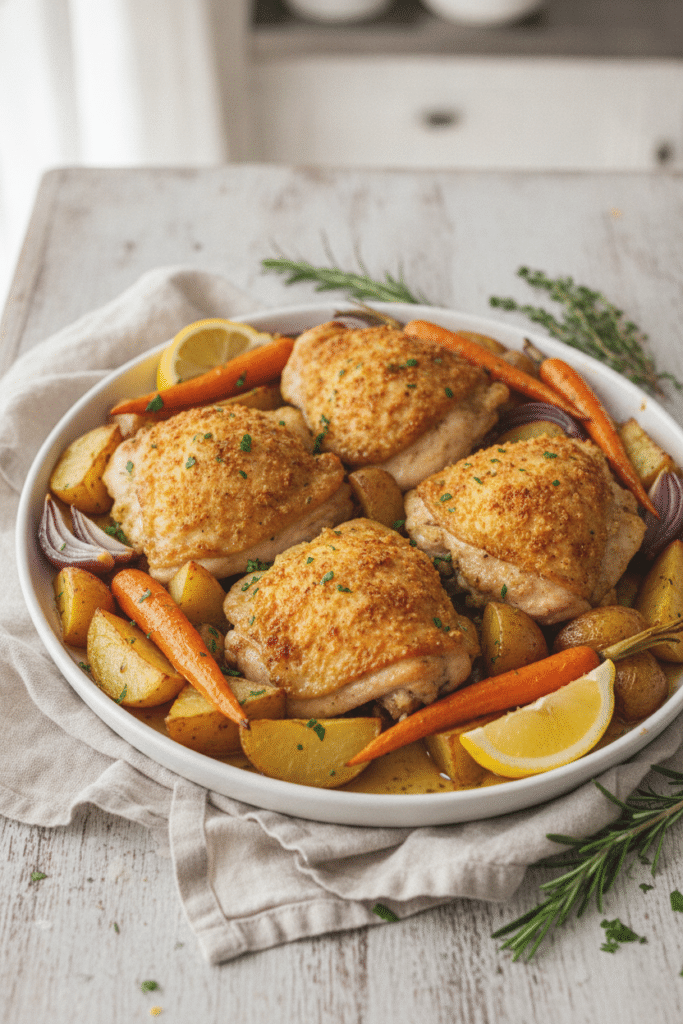
Sheet Pan Dijon Chicken Thighs and Potatoes gives you crisp-edged potatoes, tender carrots, and golden chicken from one oven pan. The mustard mixture takes a minute to stir together, and the vegetables roast in the chicken drippings. Dinner feels well cared for without much hands-on work.
Why Make This Recipe
Chicken thighs are forgiving, which is useful when the potatoes need a few extra minutes. A little Dijon mustard adds tang without making the dish taste sharply of mustard, while rosemary and garlic make the kitchen smell good before the pan even comes out of the oven.
This is the sort of easy chicken dinner recipe you can start while the oven heats. There’s no separate sauce to watch, and you can bring the pan to the table once the chicken has rested. If you’d rather cook on the stove, my chicken and broccoli rice skillet is another practical weeknight option.
How to Make Sheet Pan Dijon Chicken Thighs and Potatoes
Ingredients:
- 2 pounds bone-in, skin-on chicken thighs, about 5 to 6 thighs
- 1 1/2 pounds Yukon Gold potatoes, cut into 1-inch pieces
- 1 pound carrots, cut into 1/2-inch-thick pieces on the diagonal
- 1 small red onion, cut into thick wedges
- 3 tablespoons olive oil, divided
- 2 tablespoons Dijon mustard
- 1 tablespoon lemon juice
- 3 garlic cloves, finely minced
- 1 teaspoon chopped fresh rosemary, or 1/2 teaspoon dried rosemary
- 1 1/4 teaspoons kosher salt, divided
- 1/2 teaspoon freshly ground black pepper
- 1/2 lemon, cut into wedges, for serving
- 1 tablespoon chopped parsley, optional
Directions:
- Prep time: 15 minutes. Cook time: 40 to 45 minutes. Servings: 4 to 5. Put a rack in the middle of the oven and heat it to 425°F. Use a large rimmed sheet pan, about 13 by 18 inches, so the vegetables have room to brown.
- Pat the chicken thighs dry with paper towels. Don’t rinse raw chicken; it can spread germs around the sink and counter. The FoodSafety.gov food safety steps explain how to keep raw poultry and ready-to-eat foods separate. Set the chicken aside while you prepare the vegetables.
- Put the potatoes, carrots, and onion on the sheet pan. Toss with 2 tablespoons olive oil, 3/4 teaspoon salt, and the black pepper. Spread them out in a single layer. A few vegetables touching is fine, but a crowded mound will steam instead of roast.
- In a small bowl, stir the remaining 1 tablespoon olive oil with the Dijon mustard, lemon juice, garlic, rosemary, and remaining 1/2 teaspoon salt. The mixture should be thick enough to cling to a spoon. If your mustard is especially thick, add 1 teaspoon water.
- Place the chicken thighs skin-side up among the vegetables. Spoon the mustard mixture over the tops of the thighs and rub it across the skin. Try not to leave large clumps of garlic on top, since they can darken too quickly.
- Roast for 25 minutes. Take the pan out and turn the potatoes and carrots with a spatula, leaving the chicken skin-side up. Return the pan to the oven for 15 to 20 minutes, until the potatoes are tender when pierced with a fork and the chicken skin is deep golden.
- Check the thickest part of a thigh with an instant-read thermometer, keeping the tip away from the bone. Chicken must reach at least 165°F, as shown on the FoodSafety.gov temperature chart. If the chicken is ready before the potatoes, move it to a plate to rest and give the vegetables another 5 minutes in the oven.
- Let the chicken rest for 5 minutes. Squeeze a lemon wedge over the pan, scatter on parsley if you’re using it, and serve with the warm pan juices.
How to Serve Sheet Pan Dijon Chicken Thighs and Potatoes
Spoon some of the onion and pan juices over each serving. The potatoes are filling enough that you don’t need another starch. A simple green salad or steamed green beans will round out the plate without adding much work.
I like an extra lemon wedge at the table because everyone can decide how much brightness they want. For a cooler side, the cucumber in this crisp cucumber salad is a nice contrast to the hot chicken. Skip extra dressing on the potatoes until you’ve tasted them; they’ve already picked up plenty from the pan.
How to Store Sheet Pan Dijon Chicken Thighs and Potatoes
Let leftovers cool briefly, then refrigerate them in a covered container within 2 hours. Keep the chicken and vegetables together for an easy lunch, or separate them if you want to crisp the potatoes later. According to the FoodSafety.gov cold storage chart, cooked poultry leftovers keep for 3 to 4 days in the refrigerator.
Reheat the chicken and vegetables on a sheet pan at 375°F for about 12 to 15 minutes, until heated through. The skin won’t be quite as crisp as it was on the first night, but the oven does a better job than the microwave. For a quicker lunch, remove the chicken from the bone, slice it, and warm it with the vegetables in a covered skillet over medium-low heat.
Tips to Make Sheet Pan Dijon Chicken Thighs and Potatoes
-
Cut the potatoes into roughly equal 1-inch pieces. Big chunks can still be firm when the chicken is done, while tiny ones may burn at the edges.
-
Use a metal sheet pan rather than a deep casserole dish. The low sides let moisture escape, so the carrots and potatoes roast instead of sitting in liquid.
-
Keep the mustard coating on the chicken. Any thick puddles on the bare pan can scorch; scrape them back onto a thigh before the pan goes into the oven.
-
Leave the chicken skin-side up the whole time. Turning it halfway through makes the skin soft, and you don’t need to flip bone-in thighs for them to cook through.
-
Check the pan at 40 minutes, not just the clock. Thigh sizes vary, and a thermometer is more reliable than the color of the juices.
-
Don’t line the pan with a silicone baking mat for this recipe. Bare metal gives the potatoes better color. If cleanup is your priority, parchment works, though the vegetables may brown a little less.
Variation
Swap the carrots for broccoli florets if that’s what you have, but don’t add broccoli at the beginning. Roast the chicken, potatoes, and onion for 25 minutes first, then toss 12 ounces of broccoli with a teaspoon of oil and add it to the pan for the final 15 to 20 minutes. It should have browned tips and tender stems, not dried-out tops.
You can also use boneless, skinless thighs. Start the potatoes and carrots on their own for 15 minutes, then add the coated chicken and roast for another 20 to 25 minutes, checking that it reaches 165°F. For another dinner that leans on lemon, try honey lemon garlic chicken.
FAQs
Can I use chicken breasts instead of thighs?
Yes, but use similarly sized boneless breasts and start the vegetables first. Roast the potatoes, carrots, and onion for 15 minutes, then add the coated chicken. Begin checking the breasts after another 18 minutes and take them out as soon as they reach 165°F. Breasts dry out more easily than thighs, so don’t leave them in just because the potatoes need longer.
Why are my potatoes still pale?
The pan is probably crowded or the potatoes were damp when you added the oil. Spread them out and give them another 5 to 10 minutes in the oven, moving the finished chicken to a plate first. If you only have a smaller pan, use two pans and switch their oven positions halfway through roasting.
Can I mix the mustard coating ahead of time?
Yes. Stir it together up to a day ahead and keep it covered in the refrigerator. You can cut the carrots and onion ahead, too, but I’d cut the potatoes when you’re ready to cook so they don’t discolor. Keep the coating separate from the chicken until you’re ready to assemble the pan.
Conclusion
Give the potatoes a turn halfway through, then let the oven finish the work. Put the lemon wedges on the table and eat while the chicken skin is still crisp.