

Wilted lettuce is what happens when you pour hot bacon dressing over a bowl of tender garden lettuce and watch the leaves collapse in about four seconds. It is one of the oldest dishes in American home cooking, and one of the fastest — it takes ten minutes and three of those are frying bacon.
You may know it as killed lettuce or kilt lettuce, which is what it’s called through Appalachia and much of the South. Pennsylvania Dutch kitchens have been making a version of it for generations. The names all describe the same moment: hot fat hits cold leaves and the salad half-cooks in the bowl.
Two things decide whether it works, and both happen before you pour.
What makes wilted lettuce so good?
This is a salad built on temperature contrast. Cold, tender leaves meet a dressing that is genuinely hot — bacon fat, vinegar and a little sugar, straight from the pan. The leaves soften but don’t cook through. The dressing clings instead of pooling. You get warm and cool in the same bite, salty against sharp, and it lands somewhere between a salad and a side dish.
It also came from somewhere practical. This was a spring dish, made with the first thinnings of the lettuce patch when the leaves were small and tender and there wasn’t much else in the garden yet. Bacon fat was already in the pan. Nothing was wasted.
The first mistake is using the wrong lettuce. Iceberg will not wilt — it is bred for crunch and water content, and hot dressing just makes it limp and watery rather than silky. You want leaf lettuce: green leaf, red leaf, butter lettuce, or genuine garden looseleaf. Thin, tender leaves with no thick ribs. They collapse properly and take on the dressing.
The second is dressing that isn’t hot enough. Warm dressing makes a sad, oily salad. The fat has to come off the heat and go straight over the leaves while it’s still sizzling — that’s what wilts them. If you let the pan cool while you finish something else, reheat it before pouring.
Key ingredients and why they matter
| Key Ingredient | What To Use | Why It Matters |
|---|---|---|
| Lettuce | Leaf lettuce — green leaf, red leaf, butter, or garden looseleaf | The whole dish depends on this. Iceberg and romaine hearts are too crisp and watery to wilt properly. |
| Bacon | 4–6 thick slices, and keep the drippings | The rendered fat is the base of the dressing. Don’t drain it away. |
| Vinegar | Apple cider vinegar, 1/4 cup | Sharp enough to cut the fat. Cider is traditional; white wine vinegar works, balsamic is too sweet and muddies the colour. |
| Sugar | 1–2 tablespoons | Not to make it sweet — to round off the vinegar. Without it the dressing is harsh. |
| Green onions | 3–4, sliced, white and green parts | Traditional, and the mild onion bite is part of the flavour. Added raw. |
| Black pepper | Coarsely ground, generous | This dish is salty and sharp; pepper is the third note that makes it taste finished. |
How to make it
- Tear and chill the lettuce. Dry leaves, in a big bowl, cold from the fridge.
- Fry the bacon until crisp, lift it out, keep the drippings in the pan.
- Build the dressing in that same pan — vinegar, water, sugar — and bring it to a simmer.
- Pour it over hot and toss immediately. Serve within a minute or two.
Wilted Lettuce with Hot Bacon Dressing
The Southern and Pennsylvania Dutch classic — tender leaf lettuce collapsed under a hot, sharp bacon dressing. Ten minutes, one pan.
Ingredients
- 1 large head leaf lettuce (about 8–10 cups torn), washed and thoroughly dried
- 6 slices thick-cut bacon, chopped
- 1/4 cup bacon drippings (top up with neutral oil if short)
- 1/4 cup apple cider vinegar
- 2 tablespoons water
- 1–2 tablespoons granulated sugar, to taste
- 1/2 teaspoon salt
- 1/2 teaspoon coarsely ground black pepper
- 4 green onions, thinly sliced
- 2 hard-boiled eggs, quartered (optional)
- 4 radishes, thinly sliced (optional)
Instructions
- Wash the lettuce and dry it completely — a salad spinner or a clean towel. Wet leaves dilute the dressing and stop it clinging. Tear into bite-size pieces, put in a large heatproof bowl, scatter over the green onions, and keep it in the fridge until the moment you need it.
- Cook the chopped bacon in a skillet over medium heat until crisp, 6–8 minutes, stirring now and then. Lift the bacon out with a slotted spoon onto kitchen paper and leave the drippings in the pan.
- Measure the drippings. You want about 1/4 cup — pour some off if there’s more, or top up with a neutral oil if there’s less.
- Return the pan to medium heat and add the vinegar, water, sugar, salt and pepper. It will spit briefly. Whisk and bring to a simmer, then cook for about 30 seconds until the sugar has dissolved.
- Take the cold lettuce out of the fridge and pour the dressing over it while it is still sizzling hot, straight from the pan. Toss immediately with tongs for 15–20 seconds — the leaves will collapse and turn glossy as you go.
- Scatter the crisp bacon over the top, add the eggs and radishes if using, and serve straight away. This dish does not wait — it is at its best within a couple of minutes of the dressing hitting the bowl.
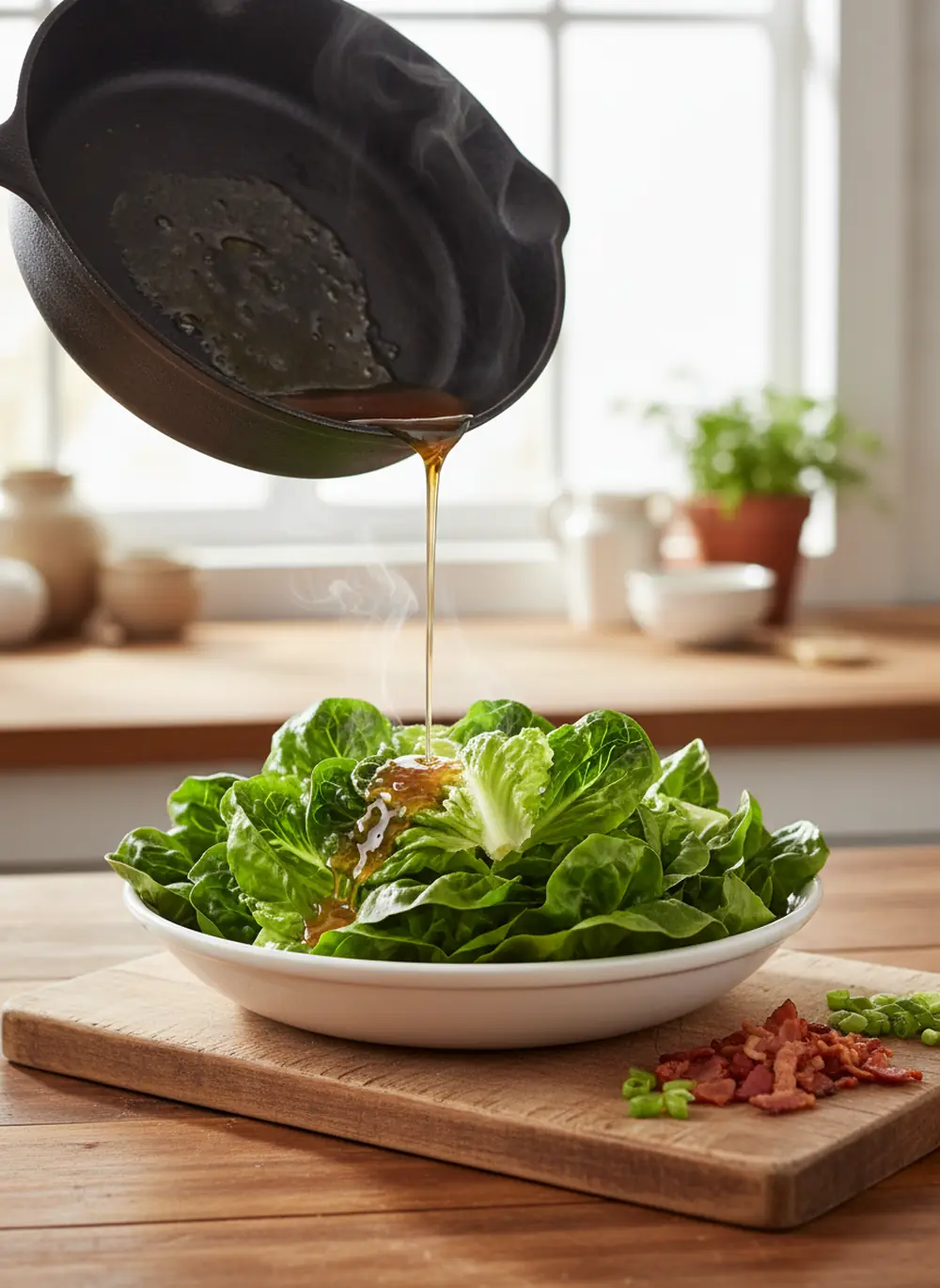
Which lettuce actually wilts
This is the decision that makes or breaks the dish, so it’s worth being specific.
| Lettuce | Wilts well? | Notes |
|---|---|---|
| Green or red leaf | ✅ Best | Thin, tender, no heavy ribs. The classic choice. |
| Butter / Bibb | ✅ Excellent | Very soft leaves, wilts almost instantly. Use slightly less dressing. |
| Garden looseleaf | ✅ Traditional | What the dish was built for. Young spring thinnings are ideal. |
| Spinach | ✅ Yes | Not traditional here, but excellent — and the basis of the better-known wilted spinach salad. |
| Romaine | ⚠️ Partly | Outer leaves are fine; the crisp hearts stay stubborn. Use the leafy tops only. |
| Iceberg | ❌ No | Too crisp and watery. Goes limp and soggy rather than silky. Don’t. |
Common problems and how to fix them
| Problem | Likely Cause | Easy Fix |
|---|---|---|
| The lettuce didn’t wilt | Dressing wasn’t hot enough, or the lettuce was iceberg | Pour it straight from a simmering pan, and use leaf lettuce. |
| Watery, diluted dressing | The leaves were still wet from washing | Dry them properly — spinner or towel. This matters more than it sounds. |
| Too sharp / harsh | Not enough sugar to balance the vinegar | Add the second tablespoon of sugar. It shouldn’t taste sweet, just rounded. |
| Too greasy | More than 1/4 cup of drippings went in | Measure them. Pour off the excess before building the dressing. |
| Went slimy by the time it reached the table | It sat too long after dressing | Dress at the table if you can. Two minutes is the window. |
| Bacon went soft | Added before the dressing | Scatter it over at the very end, on top. |
Variations and customizations
- Wilted spinach. Swap the lettuce for baby spinach and add sliced mushrooms — the classic steakhouse version.
- With potatoes. Toss in warm boiled new potatoes and it becomes a full side dish, close to a German Kartoffelsalat.
- Add mustard. A teaspoon of grainy mustard whisked into the dressing gives it body and a little heat.
- Dandelion greens. The old country version, and genuinely good — bitter greens stand up to the fat beautifully. Use young leaves.
- No bacon. Start with 1/4 cup olive oil and a little smoked paprika. Not traditional, but it works.
- Make it a meal. Add sliced grilled chicken or a couple of soft-boiled eggs.
Tips for the best results
- Keep the lettuce cold until the last second. The colder the leaves, the sharper the contrast when the hot dressing lands.
- Use a big bowl. You need room to toss fast. A crowded bowl means uneven wilting.
- Chop the bacon before frying rather than crumbling it after — you get more even pieces and more rendered fat.
- Taste the dressing in the pan before it goes over. Once it’s on the lettuce you can’t adjust it.
What to serve with it
Wilted lettuce is a side, and it belongs next to something simple and hearty — roast chicken, pork chops, cornbread, or a plate of fried potatoes. It cuts richness well, which makes it a good foil for anything fried. Our arm roast beef and this salad make an honest Sunday plate, and it works equally well alongside scalloped potatoes.
Storage — and why there isn’t much
Be realistic about this one: wilted lettuce does not keep. Within twenty minutes the leaves go from silky to slack, and by the next day it’s inedible. There is no version of this dish that survives the fridge. Make what you’ll eat.
What you can prep ahead: wash and tear the lettuce hours in advance and keep it dry and chilled in the bowl, cook the bacon earlier in the day, and measure the dressing ingredients. Then it’s a two-minute job when you want it. The dressing itself can be made ahead and reheated to a simmer before pouring — that works fine.
Frequently Asked Questions
What is wilted lettuce?
It’s a warm salad made by pouring hot bacon dressing over tender leaf lettuce so the leaves collapse and soften. It’s an old American home dish, common in the South and in Pennsylvania Dutch cooking, where it’s also called killed lettuce or kilt lettuce. It was traditionally a spring dish made with the first tender lettuce from the garden.
Why is it called killed lettuce?
Because the hot dressing “kills” the leaves — they lose their crispness and go limp on contact. “Kilt lettuce” is the Appalachian pronunciation of the same phrase. All three names describe the same dish.
Can I use iceberg lettuce?
Not really. Iceberg is bred for crunch and holds a lot of water, so instead of wilting into something silky it just goes limp and watery. Use leaf lettuce — green leaf, red leaf, butter or garden looseleaf. Baby spinach also works very well.
Why didn’t my lettuce wilt?
Almost always because the dressing wasn’t hot enough. It needs to go over the leaves straight from a simmering pan, still sizzling — warm dressing just makes an oily salad. The other cause is wet lettuce, which cools the dressing on contact and dilutes it, so dry the leaves thoroughly.
Can I make it ahead?
Not once it’s dressed — it’s at its best within about two minutes and unpleasant after twenty. You can prep every component ahead though: tear and chill the lettuce, cook the bacon, and make the dressing. Reheat the dressing to a simmer and pour it over when you’re ready to serve.
What can I use instead of bacon drippings?
If you’re short, top the drippings up with a neutral oil to reach 1/4 cup — you’ll still get plenty of bacon flavour. For a meat-free version, use 1/4 cup olive oil with half a teaspoon of smoked paprika. It isn’t traditional, but the smoke does a reasonable impression of the bacon.
An old dish worth keeping
Wilted lettuce costs almost nothing, takes ten minutes, and turns a bowl of plain leaves into something people ask about. Get leaf lettuce rather than iceberg, keep it cold, and pour the dressing while it’s still sizzling — that’s the entire recipe. Everything else is preference.