Ingredients
Method
- Pat the salmon very dry with paper towels. Season both sides with 1/2 teaspoon salt, the pepper and the smoked paprika. Let it sit while you chop the shallot and garlic.
- Heat the olive oil in the skillet over medium-high heat until it shimmers. Lay the salmon in presentation side down (skin side up if it has skin). Don't touch it for 4 minutes. It should sizzle steadily and release from the pan on its own.
- Flip and cook 1 to 2 minutes more, just to set the other side. The middle should still be underdone. Move the salmon to a plate.
- Lower the heat to medium. Add the butter and shallot and cook 2 minutes, scraping up the browned bits. Stir in the garlic and red pepper flakes for 30 seconds, until fragrant.
- Add the dry orzo and stir for about 2 minutes, until a few pieces look lightly toasted and smell nutty.
- Pour in the broth and the remaining 1/2 teaspoon salt. Bring to a simmer, cover, and cook 9 to 11 minutes, stirring every few minutes so the orzo doesn't stick. It's ready for the next step when it's almost tender and still a little loose.
- Stir in the lemon zest, spinach and Parmesan until the spinach wilts.
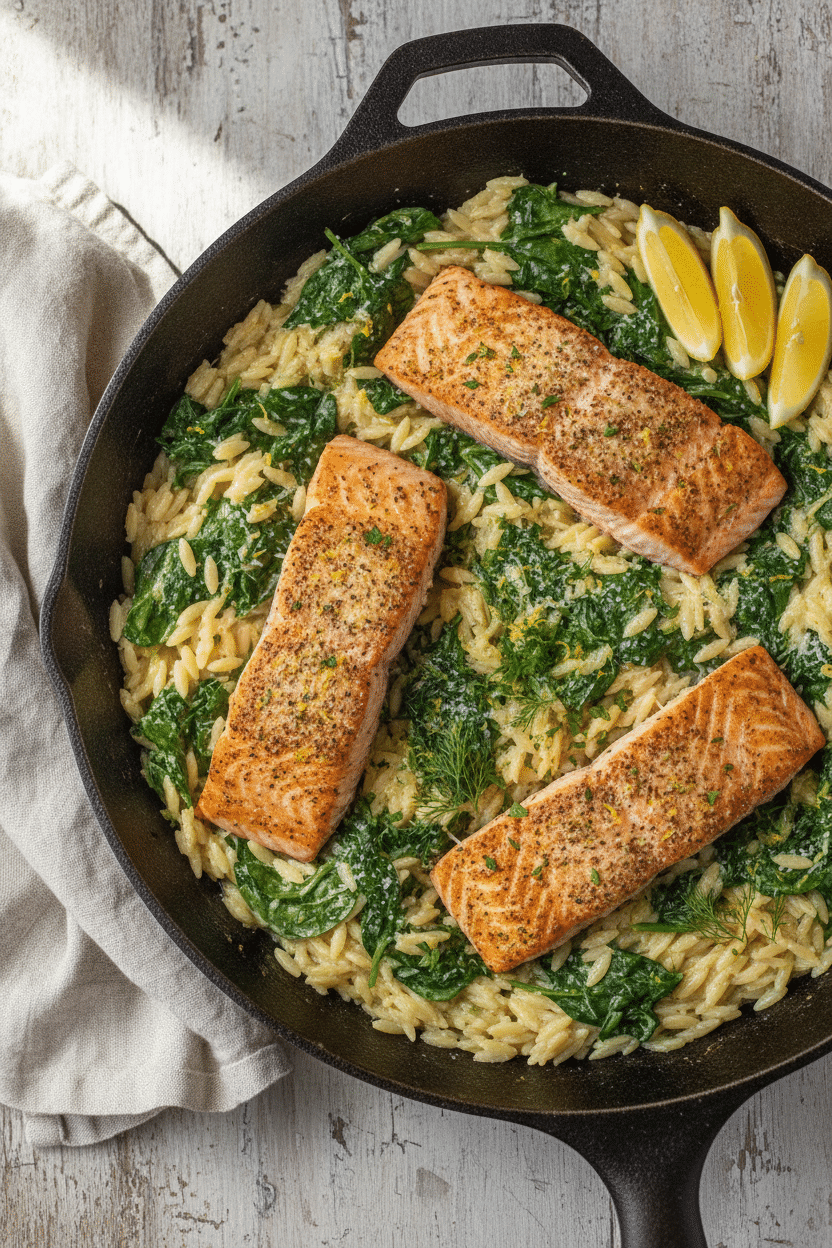
- Nestle the salmon back in, seared side up, along with any juices from the plate. Cover and cook on low for 3 to 5 minutes, until the salmon flakes easily and the orzo is creamy.
- Take the pan off the heat. Squeeze the lemon juice over everything, then scatter the parsley and dill on top. Taste the orzo and add salt if it needs it.
Notes
Use a 12-inch skillet with a lid that is deep enough to hold 3 cups of liquid. Pat the salmon dry and don't crowd the pan. Don't flip it too early, because it releases on its own once the crust forms. Undercook the salmon at first since it finishes on the orzo, and check the thickest part for 145°F. Use low-sodium broth and season at the end because the Parmesan adds salt. Add the lemon juice off the heat so it tastes bright. Keep extra broth nearby and add 1/4 cup at a time if the pan looks dry. If you use gluten-free orzo, start checking it around 7 minutes. Thaw frozen salmon overnight in the fridge and pat it very dry. Refrigerate leftovers in an airtight container for up to 3 days. To reheat, add a splash of broth or water and warm gently in a covered skillet over medium-low for about 5 minutes, or microwave at 50% power. This dish does not freeze well.