

Pan-fried Krispy Kreme donuts are what happens when you put a glazed donut in a hot skillet and let the sugar do something it was never asked to do. The glaze melts, spreads, and then caramelises into a thin sheet of hard candy across the top — crackly, amber, faintly bitter at the edges. The inside stays soft.
People have been calling it a donut crème brûlée, and that’s close to right. You’re doing the same thing a blowtorch does to the sugar on a custard, just flat on the bottom of a pan. Five minutes, one skillet, no recipe in the traditional sense.
It is also very easy to ruin, and always in the same two ways. Both are worth knowing before you turn the heat on.
What makes pan-fried donuts so good?
The whole thing rests on what a glazed donut actually is. The glaze on a Krispy Kreme Original Glazed is a thin fondant — sugar, water, a little fat, already cooked once and set to a soft shell. It is close to pure sugar, spread in an even film maybe a millimetre thick.
Put that in a pan at medium heat and it goes through three stages in about ninety seconds. First it liquefies, somewhere around 90°C, and the donut sits in a shallow pool of its own syrup. Then the water cooks off and the sugars concentrate. Then, past roughly 160°C, they start to caramelise — breaking down into hundreds of new compounds that taste toasted and slightly bitter, which is the entire point. Plain sugar tastes of nothing but sweet. Caramelised sugar tastes of something.
Underneath, the donut is fried dough with real fat in it, so it browns as well. You get two different reactions happening at once, and the result is a dessert with more going on in it than anything that took five minutes has a right to.
The first mistake is running the pan too hot. A film of sugar that thin has almost no thermal mass, so it holds no heat of its own — it just takes whatever the pan gives it, instantly. On medium-high you get maybe fifteen seconds between amber and acrid. Burnt caramel is not a lesser version of good caramel; it is a completely different, thoroughly unpleasant flavour, and once it’s there you cannot cook it back out. Medium heat. Stay at the stove.
The second mistake is eating it straight out of the pan, and this one catches nearly everybody. Hot from the skillet, that glaze is still molten — sticky and syrupy, not crisp at all. The crackle only arrives as it cools and the sugar re-sets into a brittle sheet. Give it sixty to ninety seconds on a plate or a rack. That short wait is the difference between a sticky warm donut and the thing you actually came for.
Key ingredients and why they matter
| Key Ingredient | What To Use | Why It Matters |
|---|---|---|
| Donuts | Plain glazed rings — Krispy Kreme Original Glazed is the benchmark | Thin, even, nearly pure sugar glaze. It melts and re-sets cleanly. Any supermarket glazed ring works on the same principle. |
| Age of the donut | A day old, ideally | Fresh-from-the-box donuts are so soft they compress in the pan. A day-old one has firmed up slightly and holds its shape. This is the best use for donuts nobody finished. |
| Fat | Nothing, or 1 tsp butter per donut | A dry pan works — the glaze makes its own syrup. Butter browns faster and tastes richer, but its milk solids scorch sooner, so it narrows your margin. |
| The pan | Non-stick or stainless steel | Molten sugar welds itself to whatever it touches. Non-stick is forgiving; stainless gives better colour but needs soaking straight away. |
| Ice cream | Vanilla, birthday cake, or butter pecan | Cold against hot is most of the appeal, and the cold slows the shell from softening. Keep it in the freezer until the donuts are out of the pan. |
| Flaky sea salt | A small pinch, optional | Caramel and salt is not a trend, it’s chemistry. A few flakes stop the whole thing reading as flat sweetness. |
How to make it
- Heat a dry skillet over medium — not medium-high — for two minutes.
- Lay the donuts in flat, one cut side down, and leave them completely alone.
- Flip once when the glaze is deep amber, about 60–90 seconds, and give the second side the same.
- Rest them a minute so the sugar sets hard, then top with ice cream and eat immediately.
Pan-Fried Krispy Kreme Donuts with Ice Cream
Glazed donuts seared until the sugar caramelises into a crackly crème brûlée shell, served warm under cold ice cream. Five minutes, one pan.
Ingredients
- 4 plain glazed ring donuts (Krispy Kreme Original Glazed, or any glazed ring), ideally a day old
- 4 teaspoons unsalted butter, optional — a dry pan also works
- 4 scoops ice cream — vanilla, birthday cake or butter pecan
- Flaky sea salt, a small pinch per donut (optional)
- Sprinkles, to finish (optional)
Instructions
- Take the ice cream out of the freezer only when the donuts are ready to come out of the pan — this dish is about the temperature gap, and a softened scoop closes it.
- Set a non-stick or stainless skillet over medium heat and let it come up for a full two minutes. If you are using butter, add a teaspoon per donut now and let it melt but not brown.
- Lay the donuts flat in the pan, no more than two at a time so they aren’t touching. They need direct contact with the surface across the whole face.
- Cook 60–90 seconds without moving them. The glaze will melt out, bubble around the edges, then darken. Lift one with a thin spatula at the one-minute mark to check — you want deep amber, the colour of maple syrup, not brown.
- Flip once and repeat on the second side, 60–90 seconds. It usually goes a little faster, because the pan now has hot syrup in it.
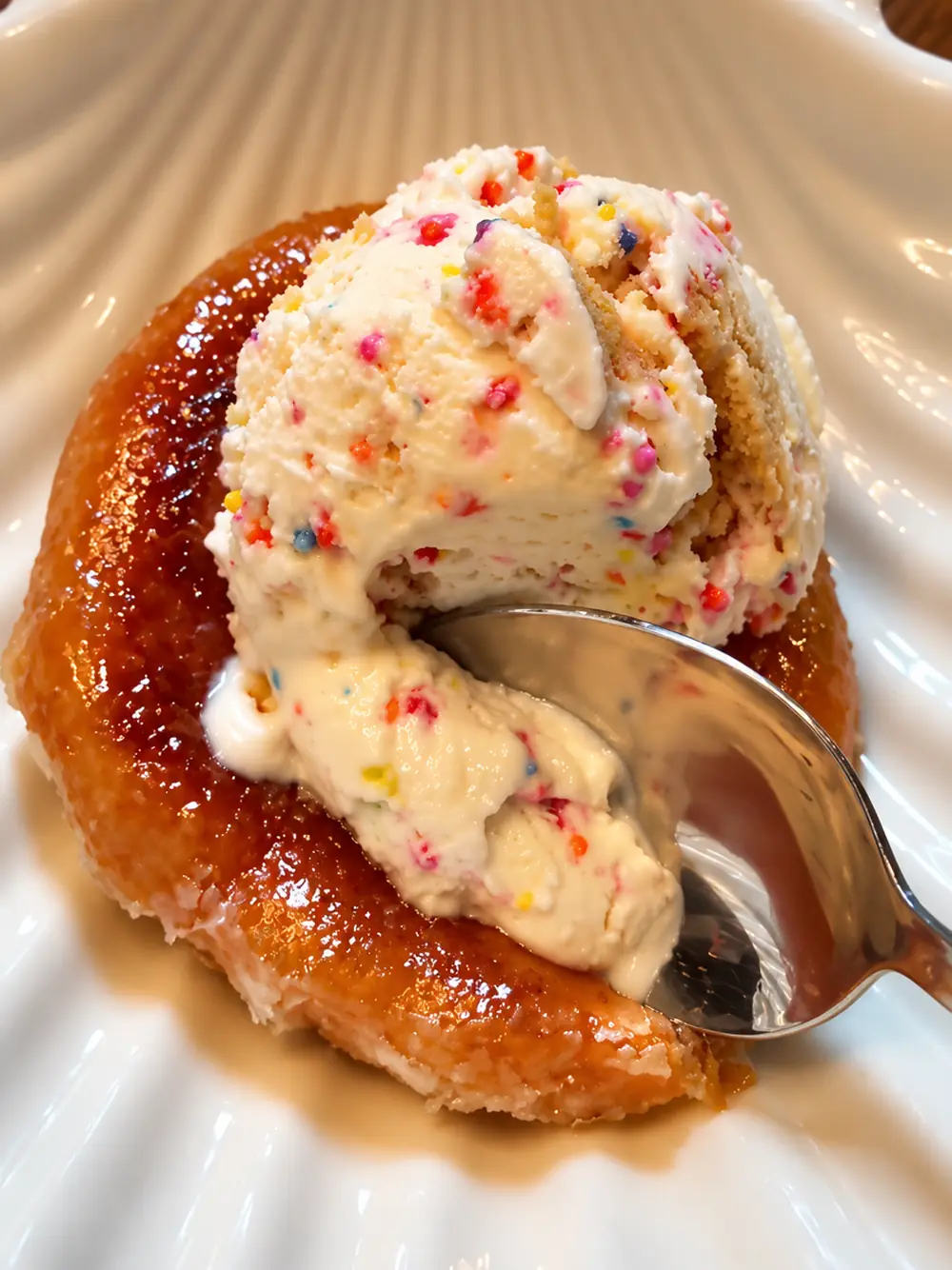
- Move them to a plate or a wire rack and leave them for at least a minute. The molten glaze hardens into a sheet as it cools — this is when the crackle happens. Skipping this step is the single most common reason people say the trick didn’t work.
- Top each with a scoop of ice cream, add a pinch of flaky salt and a few sprinkles if you like, and serve straight away. Tap the top with a spoon before you eat it — it should give a distinct crack.
- Fill the pan with hot water as soon as it comes off the heat. Cooled caramel is genuinely difficult to remove; hot water dissolves it in a couple of minutes.
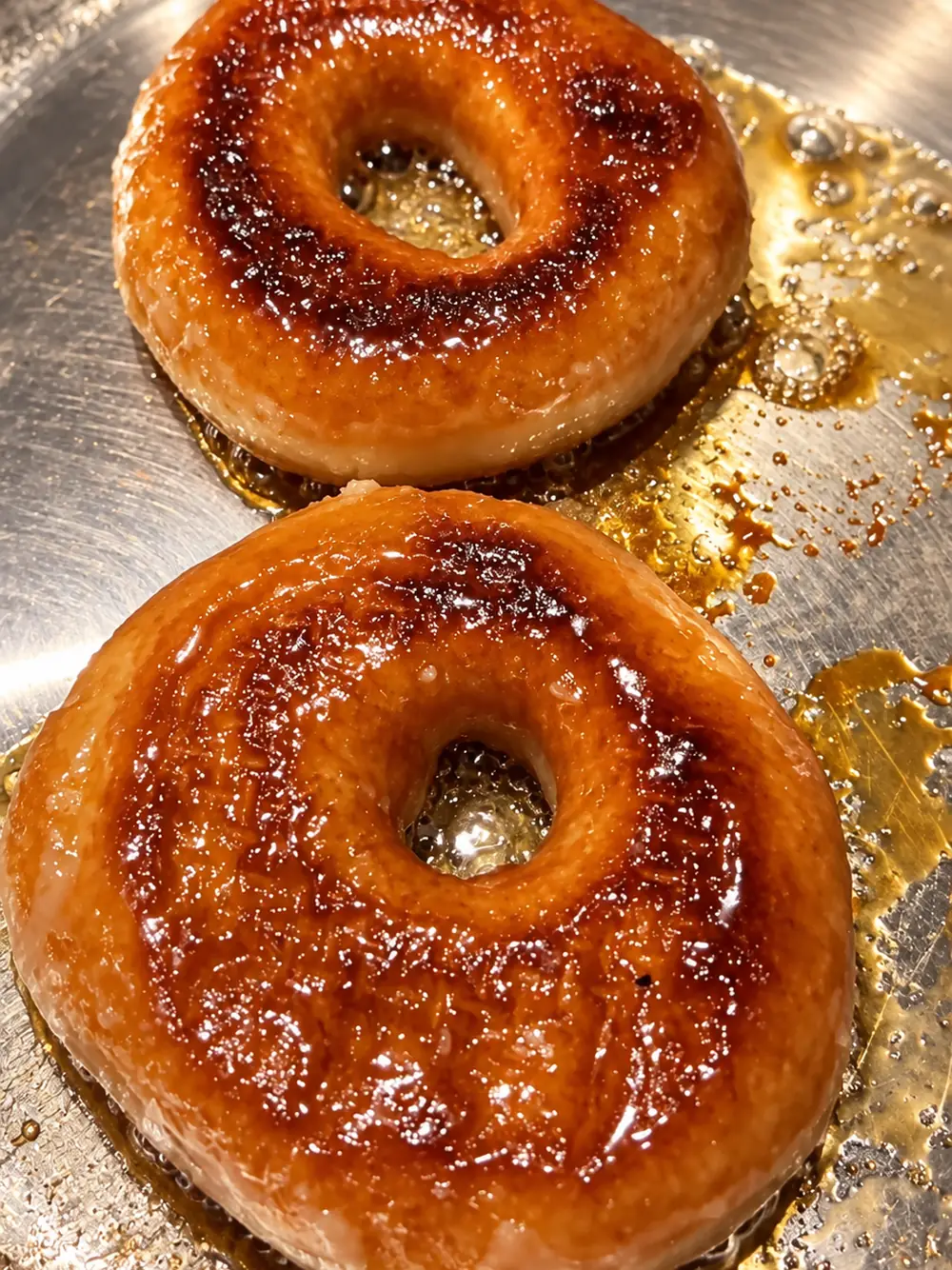
Which donuts work, and which don’t
The technique is really about the coating, not the donut. Anything with a thin sugar glaze will caramelise. Anything with fat, cocoa or dairy in its topping will scorch before the sugar gets there.
| Donut | Works? | Notes |
|---|---|---|
| Krispy Kreme Original Glazed | ✅ Best | What the trend was built on. Thin, even fondant glaze, soft interior. The benchmark. |
| Supermarket glazed rings | ✅ Yes | Slightly thicker glaze, so give them an extra 15–20 seconds a side. Very good results. |
| Old-fashioned / cake donuts | ✅ Yes | Denser crumb, holds up beautifully. Less dramatic shell but better structure under ice cream. |
| Sugar-dusted or cinnamon-sugar | ⚠️ Partly | Loose sugar burns before it melts into a sheet. Brush with a little melted butter first to help it fuse. |
| Iced or frosted rings | ❌ No | Chocolate and coloured icings contain fat and solids that scorch and turn grainy. They don’t caramelise, they seize. |
| Cream or jam-filled | ❌ No | The filling heats, expands and finds a way out. Messy, and hot jam causes real burns. |
Pan and fat: what to cook them in
| Pan | Verdict | Notes |
|---|---|---|
| Non-stick | Easiest | The forgiving choice, and cleanup is nothing. Keep it at medium — non-stick coatings shouldn’t be run hot and empty. |
| Stainless steel | Best colour | Even, hard contact and the most dramatic shell. Soak it the moment you’re done. |
| Cast iron | Use with care | Holds so much heat it overshoots easily. If you use it, heat it briefly and pull it off the burner between batches. |
| Dry pan (no fat) | Recommended | The glaze supplies its own syrup within seconds. Cleanest flavour, widest margin for error. |
| Butter | Richer, riskier | Browns faster and tastes better, but milk solids burn at a lower temperature than sugar caramelises. Watch it closely. |
| Neutral oil | Skip it | Adds nothing the donut doesn’t already have, and makes the surface greasy rather than crisp. |
Common problems and how to fix them
| Problem | Likely Cause | Easy Fix |
|---|---|---|
| Sticky, not crisp | Eaten too soon — the sugar was still molten | Rest for 60–90 seconds. The shell sets as it cools, not in the pan. |
| Bitter and dark | Heat too high; the sugar went past caramel | Drop to medium and pull them at deep amber. There’s no rescuing burnt caramel. |
| Pale, no shell at all | Pan wasn’t hot enough, or you moved them | Preheat two full minutes and leave them completely still for the first minute. |
| Squashed and dense | Donut was very fresh and soft | Use day-old donuts, and don’t press down with the spatula. |
| Welded to the pan | Sugar cooled and set on the surface | Lift with a thin metal spatula while it’s still hot. For the pan itself, hot water dissolves it. |
| Ice cream slid straight off | Donut still too hot | That one-minute rest fixes this too. A little melt is good; a puddle is not. |
| Uneven caramelisation | Warped pan, or too many donuts at once | Two at a time, not touching. A flat pan matters more here than usual. |
Variations and customizations
- Salted caramel. Flaky salt on the shell plus a thread of warm caramel sauce. The most obvious upgrade and still the best one.
- Donut sundae. Two donuts stacked with ice cream between them, hot fudge over the top. Absurd, and it works.
- Espresso affogato. Vanilla ice cream on the donut, then a shot of hot espresso poured over at the table. The bitterness cuts the sugar better than anything else here.
- Berries and cream. Macerated strawberries or raspberries and softly whipped cream instead of ice cream — closer to a shortcake, and considerably less sweet.
- Cinnamon butter. Cook in butter mixed with a pinch of cinnamon for something close to a churro.
- Bananas Foster. Caramelise banana slices in the same pan afterwards and spoon them over. They pick up the leftover sugar.
- Savoury edge. A crisp slice of bacon on top. Salt, fat and caramel is a genuinely good combination, whatever it sounds like.
Tips for the best results
- Medium heat, and don’t leave the stove. This takes ninety seconds a side. There is no point in the process where walking away is safe.
- Two donuts at a time. Crowding drops the pan temperature and they steam instead of caramelising.
- Judge by colour, not the clock. Deep amber. Every hob is different and 60 seconds on yours may not be 60 seconds on someone else’s.
- Rest on a wire rack if you have one. On a plate the underside sits in its own syrup and softens; on a rack air gets to both faces and the shell sets harder.
- Never stack them warm. They will glue together and you will break both getting them apart.
- Molten sugar is dangerous. It runs well above 150°C and it sticks to skin instead of running off, which is what makes sugar burns worse than most kitchen burns. Don’t touch the caramel, don’t let children flip the donuts, and don’t taste anything straight from the pan.
What to serve it with
This is a dessert that wants very little around it. Coffee is the natural partner — something dark enough to push back against the sugar. Cold milk works for the same reason. If you’re building a spread rather than a single plate, keep the rest of it sharp: a bowl of berries, or something with acidity like our dark chocolate covered strawberries.
If it’s the fried-dough-and-sugar idea that appeals rather than this particular shortcut, our apple fritters are the from-scratch version of the same pleasure, and the sticky buns get to a similar place with caramel and a slow oven instead of a hot pan.
Storage — and why there isn’t any
Be honest with yourself about this one: caramelised donuts do not keep. The shell is hard sugar, and sugar is hygroscopic — it pulls moisture out of the air and out of the donut underneath it. Within about twenty minutes the crackle has gone soft. By the next morning you have a slightly sticky, slightly stale donut and no trace of what made it good.
So cook only what you’re going to eat, and cook it after everyone has sat down. If you do end up with leftovers, they’re fine in an airtight container overnight and perfectly pleasant with coffee — just don’t expect the shell back. Re-frying a donut that’s already been caramelised once pushes the sugar straight into burnt, because it starts most of the way there.
Frequently Asked Questions
Why do you pan-fry a Krispy Kreme donut?
Heating the glaze melts it and then caramelises the sugar, which sets on cooling into a thin, crackly shell — much like the top of a crème brûlée. You get a crisp exterior against a soft interior, plus the toasted, slightly bitter flavour that caramelised sugar has and plain sugar doesn’t. It takes about five minutes and needs nothing but a pan.
Do I need butter or oil in the pan?
No. A dry pan works perfectly well, because the glaze liquefies within seconds and the donut ends up cooking in its own syrup. A teaspoon of butter per donut adds richness and browns things faster, but butter’s milk solids scorch at a lower temperature than sugar caramelises, so it gives you less margin for error. Skip the oil entirely — it just makes the surface greasy.
How long do you cook them for?
About 60 to 90 seconds a side over medium heat, but go by colour rather than time. You want deep amber, roughly the shade of maple syrup. Lift one with a thin spatula at the one-minute mark to check. Past amber it turns bitter very quickly — there’s only about fifteen seconds between good and ruined.
Why isn’t mine crispy?
Almost always because it was eaten too soon. Straight out of the pan the glaze is still molten and sticky — it only turns brittle as it cools and the sugar re-sets. Rest the donuts for 60 to 90 seconds on a plate or wire rack before topping them. The other cause is a pan that wasn’t hot enough, or donuts that were moved around in the first minute instead of being left to sit.
Can I use other donuts?
Any plain glazed ring works, including supermarket ones — give thicker glazes an extra 15 to 20 seconds a side. Cake and old-fashioned donuts are good too. Avoid iced or frosted donuts, because chocolate and coloured icings contain fat and solids that scorch instead of caramelising, and avoid cream or jam-filled ones, where the hot filling expands and escapes.
Are day-old donuts better for this?
Yes, slightly. A very fresh donut is soft enough to compress under its own weight in the pan, while one that’s a day old has firmed up and holds its shape. It’s the best possible use for donuts nobody finished — the heat softens the crumb again and the caramelised shell more than makes up for any staleness.
Worth the five minutes
There is not much in cooking that rewards this little effort this well. One pan, no measuring, ninety seconds a side, and a donut that was going stale on the counter turns into something with a shell you have to crack with a spoon.
Keep the heat at medium, pull them at deep amber, and give them that minute to set before the ice cream goes on. Everything else is just how sweet you want your evening to be.